Dutch Defence Ministry Locks In Standby Cargo Ships From a 125 Year Old Family Shipping Firm
06 Aug 2026
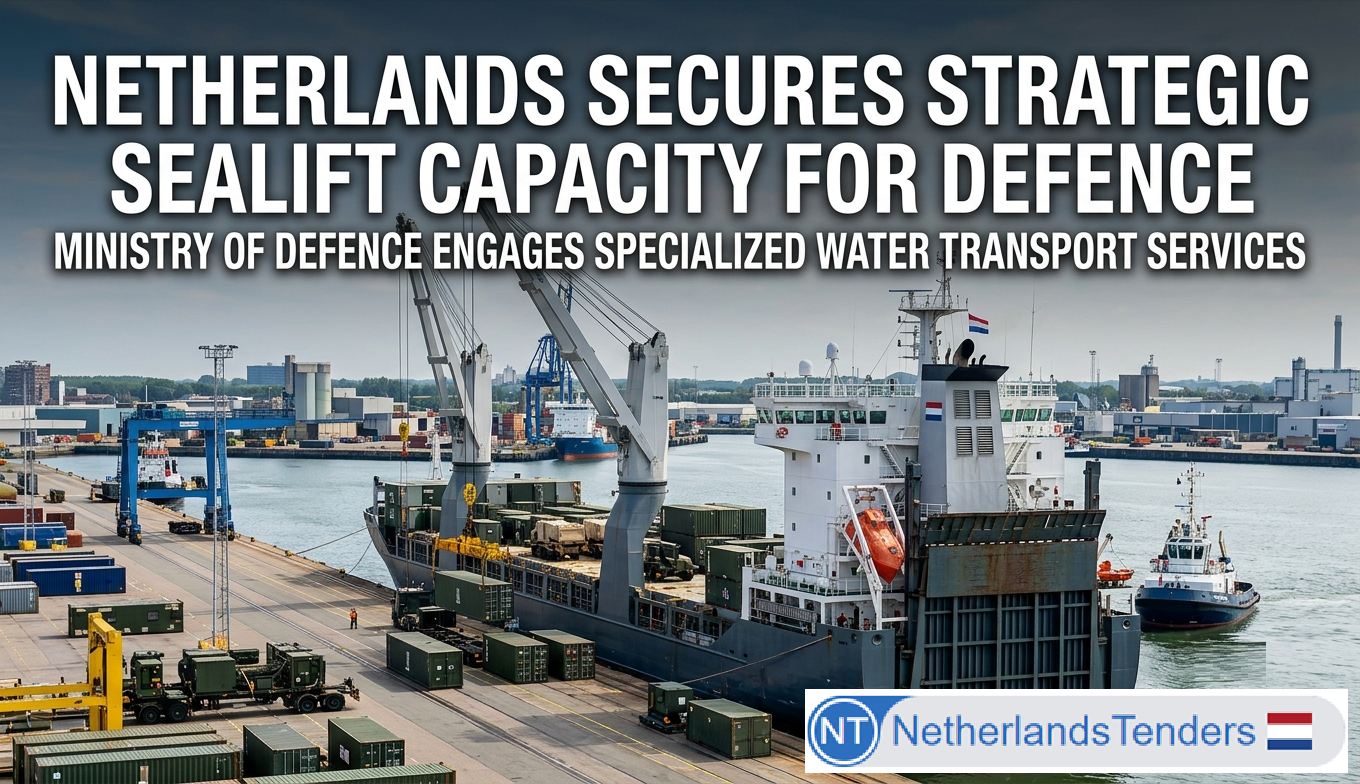
Standfirst The Dutch Ministry of Defence has awarded Wagenborg Offshore Holding B.V. a framework agreement securing guaranteed access to three Load on Load off cargo vessels, ready to sail within 10, 15 or 20 days' notice, beating fellow Dutch shipping group Spliethoff Transport in a two firm competition. The contract's own figures disagree sharply on scale, ranging from just over EUR 17 million to nearly EUR 345 million. Introduction Militaries do not own enough ships to move everything they might need, everywhere they might need it, on short notice. Instead, many rely on standby arrangements with commercial shipping companies, paying to guarantee access to vessels that can be activated quickly when required, rather than maintaining an oversized fleet of their own. The Netherlands has just renewed exactly this kind of arrangement. Wagenborg Offshore Holding B.V., part of the 125 year old, family owned Royal Wagenborg maritime group, has won a framework agreement to provide the Dutch Ministry of Defence with guaranteed access to three cargo vessels capable of loading and unloading cargo without port crane infrastructure, on notice periods as short as ten days. Why This Contract Matters Strategic sealift capacity, the ability to move military equipment and supplies by sea on demand, is a foundational piece of national defence logistics, particularly for a country like the Netherlands whose armed forces regularly deploy or support allied operations beyond its own borders. Rather than owning and crewing its own transport fleet for this purpose, the Ministry of Defence secures Assured Access to commercial vessels through contracts like this one. The structure here, three vessels available at three different notice periods, 10, 15 and 20 days, suggests a tiered readiness model: faster access likely commands a premium, giving the Ministry flexibility to balance cost against how quickly it might need sealift capacity in different scenarios. Contract Timeline Original tender procedure referenced by this result: a previously published notice on file with the Publications Office Winner selected: 25 March 2026 Contract concluded and framework start date: 20 April 2026 Notice dispatched to the Publications Office: 5 August 2026 Published in the Official Journal, OJ S 150/2026: 6 August 2026 Base framework term ends: 20 April 2031 Contract Overview The Ministry of Defence ran a restricted procedure under the EU's defence and security procurement directive for a framework agreement covering the hire of three Load on Load off vessels on the basis of Assured Access, with Notice to Move periods of 10, 15 and 20 days respectively. Two tenders were submitted, both electronically and Wagenborg Offshore Holding B.V. was selected as the sole winner, ahead of Spliethoff Transport B.V. The framework runs without reopening of competition, meaning the Ministry will call on Wagenborg directly under the agreed terms rather than running further competitions during the contract term. Its base period runs five years, from 20 April 2026 to 20 April 2031, with two available one year renewal options, for a potential total term of seven years. Key Contract Details Contracting authorityMinisterie van Defensie (Dutch Ministry of Defence) Contract titleStrategic Sealift LoLo capacity CPV code60650000, Hire of water transport equipment with crew Procedure typeRestricted procedure Legal basisDirective 2009/81/EC, the EU Defence and Security Procurement Directive Estimated value (procedure, lot and results sections)EUR 17 355 371, excluding VAT Maximum framework value stated at procedure and lot levelEUR 344 925 000, an outlier not repeated in the results section of the same notice Base contract term20 April 2026 to 20 April 2031 Renewal optionsUp to 2 renewals of 1 year each, maximum total term 7 years Award criteriaLowest price, single fixed criterion, 100 percent Tenders received2, both submitted electronically WinnerWagenborg Offshore Holding B.V. Non-winning tendererSpliethoff Transport B.V. Winner selected25 March 2026 Contract signed20 April 2026 EU fundingNo Framework structureFramework agreement without reopening of competition SubcontractingNo Review deadline7 days Complaints received0 Notice reference546021 2026, OJ S 150/2026, published 6 August 2026 Project Scope The contract secures Assured Access to three Load on Load off or LoLo, vessels, a type of cargo ship equipped with onboard cranes or ramps that let it load and unload cargo without depending on shore based port equipment, a valuable feature for military logistics operating into ports with limited infrastructure. Each of the three vessels carries a different Notice to Move requirement, meaning Wagenborg must be able to make each ship available for Ministry use within 10, 15 or 20 days of activation, depending on which vessel is called upon. The notice directs further technical detail to separate tender documentation not included in the published record and states the place of performance simply as anywhere. About the Contracting Authority The Ministerie van Defensie, the Dutch Ministry of Defence, is based in The Hague. Its contact for this tender was Cindy Kuyt. As the Netherlands' national defence ministry, it maintains a range of standing service arrangements with commercial providers to supplement its own military logistics and transport capabilities, of which this sealift framework is one example. About the Organisations Involved Ministerie van Defensie As covered above, the Ministry of Defence is the buyer and group leader for this contract and is also the organisation that signed the resulting agreement with Wagenborg. Rechtbank Den Haag Rechtbank Den Haag, The Hague District Court, appears in the notice's organisational records in connection with this procurement, consistent with its standard role as the review venue for Dutch Ministry of Defence procurement disputes, alongside a stated seven day review deadline. Wagenborg Offshore Holding B.V. Wagenborg Offshore Holding B.V., based in Delfzijl, is the winning supplier. It is part of Royal Wagenborg, a family owned and managed maritime logistics group founded in 1898 and still headquartered in Delfzijl, employing roughly 3 000 people across shipping, offshore support, towage, heavy lifting and port services, with a commercial network extending into Sweden, Finland, Greece, Spain, Canada and beyond. The group's long track record includes multi year charter arrangements with major industrial clients, including a ten year contract with Shell for a specialised offshore support vessel, experience directly relevant to sustaining a multi year Assured Access commitment of the kind this Ministry of Defence contract requires. Spliethoff Transport B.V. Spliethoff Transport B.V., based in Amsterdam, submitted the sole competing, non-winning tender. Spliethoff is itself a long established major Dutch shipping group, known internationally for multipurpose and heavy lift cargo vessel operations, making this a genuine contest between two of the Netherlands' most established maritime logistics players. Procurement Analysis The Ministry ran this as a restricted procedure under the EU's defence and security procurement directive, appropriate for a contract involving national military logistics capability. Only two suppliers competed, both established Dutch shipping groups with the scale and vessel access needed to credibly offer guaranteed multi year sealift capacity, a specialised requirement that naturally limits the realistic field of bidders regardless of how the tender itself was run. Award criteria were decided entirely on price, a single fixed criterion worth the full 100 points, suggesting that once bidders demonstrated the technical capability to meet the Assured Access and Notice to Move requirements, cost became the deciding factor between two qualified competitors. This notice contains a significant unresolved value discrepancy. At the procedure and lot description level, two figures appear side by side: an estimated value of EUR 17 355 371 and a separately stated maximum framework value of EUR 344 925 000, nearly twenty times higher. Yet in the notice's own results section, both the maximum value of the framework agreement and its re-estimated value are recorded at EUR 17 355 371, matching the smaller figure rather than the larger one. The much higher EUR 344 925 000 figure does not reappear anywhere in the results section and the contracting authority offers no explanation reconciling the two. One plausible reading, though unconfirmed by the notice itself, is that the larger figure represents a theoretical ceiling covering full activation and extended real world use of all three vessels across the contract's maximum seven year term, while the smaller, more consistently repeated figure reflects the baseline cost of simply maintaining the standby Assured Access arrangement. Readers should treat this as an open question rather than a resolved one. Additional Procurement Facts This project is confirmed as not financed with EU funds. Subcontracting is marked as not applicable for the winning tender. No complaints were recorded against this award. The contract's start date aligns exactly with its conclusion date, 20 April 2026, indicating the framework became active immediately upon signature. Market and Industry Perspective Strategic sealift charter arrangements of this kind sit within a broader European pattern of national militaries relying on commercial shipping capacity rather than owning dedicated transport fleets outright, a model that shifts vessel maintenance and crewing costs onto established maritime operators while preserving military access to capacity when genuinely needed. The two firm competitive field here, Wagenborg against Spliethoff, reflects how concentrated the pool of Dutch shipping groups capable of offering this kind of guaranteed, multi year military charter commitment actually is. Wagenborg's win also fits a broader trend of established family owned European shipping conglomerates diversifying into long term government and industrial charter arrangements, alongside their traditional commercial shipping, offshore energy support and towage businesses, as a way of securing stable, multi year revenue streams. Economic Significance Taking the more consistently supported figure of EUR 17 355 371, this is a moderate but meaningful defence logistics commitment for the Netherlands, securing critical sealift readiness over a term that could run to seven years. Should the higher EUR 344 925 000 ceiling reflect a genuine potential maximum, the contract's real economic significance to Wagenborg could be substantially larger, underlining why the unresolved discrepancy in this notice matters for anyone assessing the deal's true scale. Future Procurement Opportunities The framework's two available one year renewal options give the Ministry natural review points as the base term approaches its 2031 conclusion, with a full recompete likely thereafter if the arrangement is not extended. Given the specialised nature of this capability, any future retender is likely to again draw primarily from the same small pool of major Dutch and possibly other European shipping groups capable of offering guaranteed military charter access. Opportunities for Suppliers Shipping companies with LoLo vessel capacity and the operational scale to commit to multi year guaranteed access arrangements should note that Dutch defence sealift contracts of this kind remain a competitive, if narrow, market. Firms not currently engaged with the Ministry of Defence in this capacity may find opportunities as the framework's renewal decisions and eventual recompete approach. What Businesses Should Watch Whether the Ministry of Defence or the Publications Office clarifies the gap between the EUR 17 355 371 and EUR 344 925 000 figures in this notice. Whether the Ministry exercises either of its two available one year renewal options as the base term progresses. Broader Dutch and European defence sealift charter activity, given the specialised, concentrated nature of this supplier market. Wagenborg's continued expansion into long term government and industrial charter contracts alongside its core shipping and offshore business. NetherlandsTenders.com Procurement Intelligence This award is a useful illustration of how European militaries increasingly lean on established commercial shipping relationships rather than owning dedicated sealift fleets, converting a capability requirement into a long term charter partnership with a firm that already has the vessels, crews and operational track record in place. For a country like the Netherlands, this model trades some direct control for considerable cost efficiency and flexibility. The value discrepancy in this notice, a near twentyfold gap between figures appearing in different sections of the same document, is a reminder that defence procurement notices, often published with less granular detail than civilian contracts for legitimate security reasons, can leave real ambiguity in the public record about a contract's true financial scale. Businesses and analysts tracking European defence logistics spending should treat headline figures in notices like this one with appropriate caution and where possible, seek to understand how each value field was actually calculated before drawing conclusions about market size. Strategically, Wagenborg's win here reinforces how established family owned maritime groups with century plus track records continue to compete successfully for sophisticated government logistics contracts against larger or more diversified rivals, suggesting operational reliability and existing charter relationship experience carry real weight in this kind of tender, alongside price. Supplier Takeaways Only two established Dutch shipping groups competed for this contract, reflecting how narrow the field is for firms able to offer guaranteed multi year military sealift access. The award was decided entirely on price, a single fixed criterion worth the full evaluation weight. This notice's value figures do not reconcile, with a near twentyfold gap between the estimated value and a separately stated framework maximum that does not reappear in the results section. The framework can run for up to seven years if both available one year renewal options are exercised. Established maritime groups with long term charter experience, such as prior multi year industrial contracts, appear well positioned for this kind of defence logistics work. Key Takeaways The Dutch Ministry of Defence awarded Wagenborg Offshore Holding B.V. a framework agreement for Assured Access to three Load on Load off cargo vessels, with Notice to Move periods of 10, 15 and 20 days. Only two tenders were received, with Spliethoff Transport B.V. as the unsuccessful competitor. The notice contains an unresolved value discrepancy, ranging from EUR 17 355 371 to EUR 344 925 000 depending on which section of the document is read. The framework runs for a base term of 5 years, with up to two further 1 year renewal options. Award criteria were 100 percent price and no complaints were recorded against the award. The contract falls under the EU's defence and security procurement directive. Conclusion Guaranteed sealift access rarely makes headlines, but it is exactly the kind of unglamorous, dependable capability a modern military logistics chain depends on. Wagenborg's century old family shipping business now holds that role for the Dutch Ministry of Defence, in a contract whose true financial scale, somewhere between seventeen million and nearly three hundred and forty five million euro depending on which figure in the notice you trust, remains one more example of how much interpretation defence procurement transparency still leaves to the reader. Source: Tenders Electronic Daily (TED), Contract Award Notice 546021-2026, Official Journal of the European Union, OJ S 150/2026, published on 6 August 2026.
View Details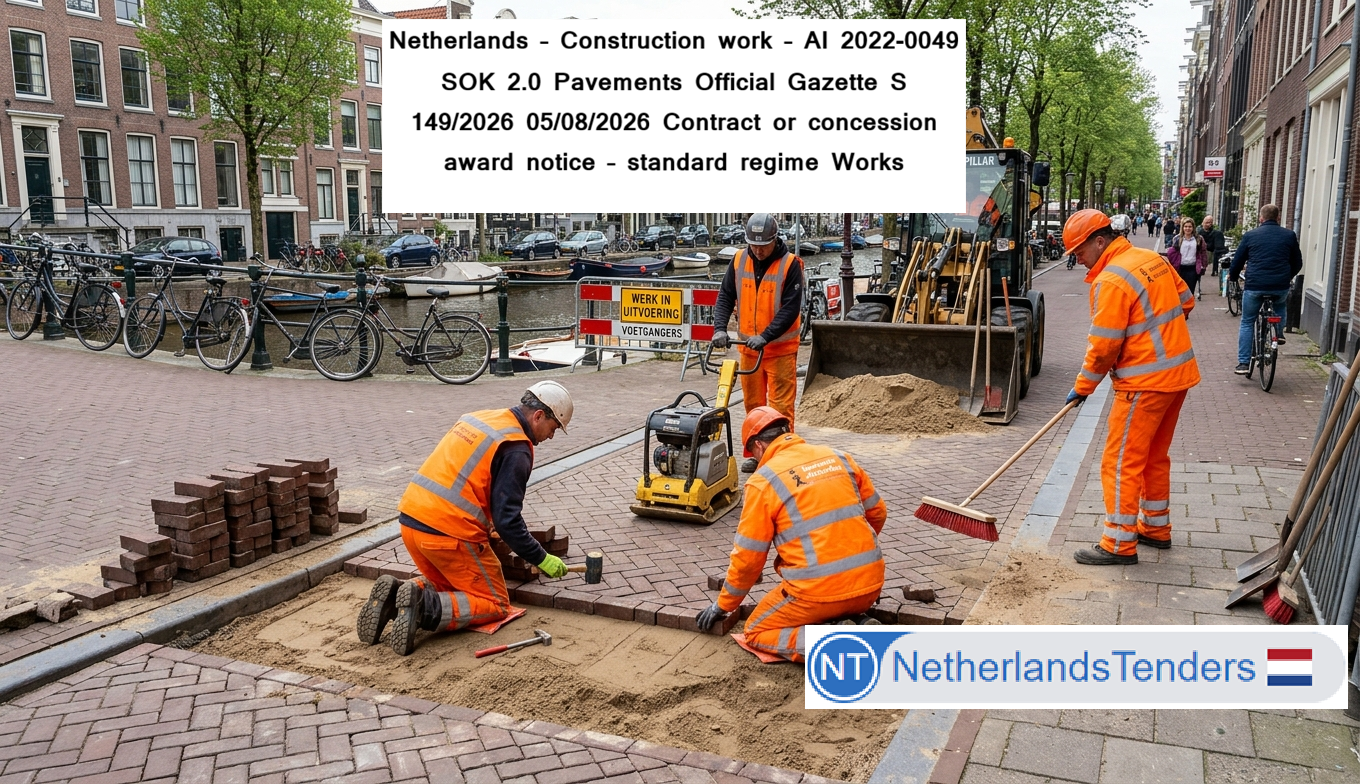
Amsterdam Launches Multi Contractor Road Infrastructure Framework to Support Four Years of Urban Street and Pavement Works
05 Aug 2026
Standfirst Amsterdam is strengthening the long term maintenance and renewal of its road infrastructure through a four year framework agreement covering pavement and asphalt works across 14 geographical areas of the city. The procurement establishes a structured delivery model that enables municipal authorities to prepare and award individual work packages efficiently while maintaining competition and operational resilience. Introduction Reliable roads and public spaces are essential to the daily functioning of a modern city. From public transport and emergency services to cycling and pedestrian mobility, the quality of urban streets directly affects economic activity and quality of life. As infrastructure ages and urban development continues, municipalities increasingly require long term procurement models that provide both flexibility and predictable contractor capacity. Against this backdrop, the Municipality of Amsterdam has awarded the AI 2022 0049 SOK 2.0 Verhardingen framework agreement for construction and maintenance works covering road pavements and asphalt infrastructure. The agreement is intended to support both new construction and ongoing maintenance across Amsterdam through coordinated cooperation between municipal departments and selected contractors over a four year period. The procurement has been divided into two principal lots representing different categories of road infrastructure works. Together they cover fourteen geographical areas within Amsterdam and establish a framework under which municipal authorities can prepare projects jointly with framework contractors before awarding specific implementation contracts. According to the notice, a contractor may obtain a maximum of one geographical area while also serving as a reserve contractor for another area. Why This Contract Matters Urban road networks require continuous investment rather than periodic reconstruction alone. Routine maintenance, pavement renewal and rapid repair of damaged surfaces help reduce lifecycle costs while improving road safety and limiting disruption for residents and businesses. The Amsterdam framework reflects a procurement strategy focused on long term collaboration instead of repeated standalone tenders for every maintenance activity. By creating framework agreements that remain in place for forty eight months, the municipality can accelerate the preparation and execution of future projects while maintaining consistent technical standards across multiple districts. The framework also supports several municipal departments responsible for public infrastructure. According to the notice, the principal clients include the municipal directorates responsible for Traffic and Public Space for major maintenance and redevelopment projects, City Works for routine maintenance and Land and Development for new construction and site preparation activities. Contract Timeline Procurement AI 2022 0049 SOK 2.0 Verhardingen Notice Type Contract or concession award notice Procedure Restricted procedure Contract Duration 48 months Framework Structure Framework agreement without reopening of competition Framework Maximum Value EUR 440000000 maximum framework value. The notice does not indicate that this amount represents guaranteed expenditure. Contract Signature Dates Individual contracts for successful framework participants were concluded during April and May 2023 according to the notice. Contract Overview The procurement establishes a city wide framework agreement for pavement and asphalt construction activities across Amsterdam. The agreement has been organised into two lots. Lot 1 covers pavement and element surface works across ten geographical areas. The scope includes excavation, road foundations, paving works, repairs, reinstatement of street furniture, road markings, temporary traffic measures, tree planting infrastructure and routine maintenance activities such as repairing settlement, damaged paving elements and kerbstones. Lot 2 focuses on asphalt works across four geographical areas. Activities include milling existing asphalt, construction of asphalt pavements from foundation through surface layers, asphalt repairs, reinstatement of paving elements, road markings, associated street furniture and maintenance connected with cable and utility trench reinstatement. The procurement falls under Directive 2014 24 EU and is covered by the Government Procurement Agreement. The notice also states that the project is not financed by European Union funds. Key Contract Details Contracting Authority Gemeente Amsterdam Ingenieursbureau Country Netherlands Region Groot Amsterdam Contract Type Works Main CPV 45000000 Construction work Additional CPV 45233222 Paving and asphalting works and 71000000 Architectural construction engineering and inspection services Procedure Restricted Framework Duration 48 months Framework Maximum Value EUR 440000000 Lots 2 Project Location Amsterdam Netherlands Project Scope The framework has been designed to provide Amsterdam with long term delivery capacity for both planned infrastructure renewal and day to day maintenance of roads and public spaces. Rather than covering a single construction project, it creates an operational model through which individual municipal departments can commission works within predefined geographical areas during the agreement period. The scope extends beyond road surfacing alone. Contractors may undertake excavation, pavement construction, asphalt replacement, road markings, reinstatement of street furniture, temporary traffic management, landscaping directly associated with road infrastructure and maintenance of public realm assets. This integrated approach allows related infrastructure activities to be coordinated under a single contractual framework, reducing procurement repetition while supporting consistent delivery standards across the city. About the Contracting Authority Gemeente Amsterdam Ingenieursbureau serves as the contracting authority for this procurement. As the engineering bureau of the Municipality of Amsterdam, it supports the planning and delivery of public infrastructure projects across the city. The organisation coordinates engineering, procurement and project delivery for transport infrastructure, public spaces and urban development programmes. For this framework, the engineering bureau is acting on behalf of several municipal departments that require long term delivery capacity for road construction and maintenance. According to the notice, the principal users of the framework include the directorates responsible for Traffic and Public Space, City Works and Land and Development. These departments will be able to prepare individual projects together with framework contractors before awarding implementation contracts during the four year framework period. The procurement follows a framework agreement model without reopening competition for individual call offs. This allows participating municipal authorities to award work packages directly to the appointed framework contractor for the relevant geographical area under the terms established by the agreement. About the Organisations Involved Gemeente Amsterdam Ingenieursbureau is the contracting authority and the organisation signing the framework contracts. It is responsible for managing the procurement process and administering the framework agreement throughout its duration. Framework Winners for Lot 1 Lot 1 covers pavement and element surface works across ten geographical areas. The notice identifies multiple framework participants that have been awarded contracts under this lot. Appointment to the framework enables these companies to receive work within the agreed framework conditions. The published framework maximum value represents the ceiling for the framework and does not represent guaranteed revenue for any individual contractor. H. van Wijk infra B.V. was appointed as a framework contractor for Lot 1. Contract CON 0001 was concluded on 7 April 2023. Straatmakersbedrijf H.C. Koot B.V. joined the framework under Contract CON 0002 concluded on 23 May 2023. Gebr. Griekspoor B.V. was selected as another framework participant for Lot 1. Compeer Infra was appointed as a framework contractor for Lot 1. The notice identifies the company as a small economic operator. Aannemingsmaatschappij Markus B.V. was awarded a place on the Lot 1 framework. Reimert Bouw en Infrastructuur B.V. also secured a framework agreement for Lot 1. Framework Winners for Lot 2 Lot 2 covers asphalt works across four geographical areas. The framework has a published maximum value of EUR 200000000. The notice specifies that this figure is the maximum framework value rather than confirmed expenditure. Heijmans Infra B.V. was appointed as a framework contractor under Contract CON 0011 for Lot 2. Aannemingsmaatschappij van Gelder B.V. secured a framework position under Contract CON 0012. The company is identified as a large economic operator in the notice. KWS Infra B.V. was awarded a framework contract under Contract CON 0013. Dura Vermeer Infra Regionale Projecten BV was also selected as a framework contractor for Lot 2. SCHOT Infra bv is identified in the notice as a framework winner for Lot 2. Gebr. Beentjes Grond Weg en Waterbouw B.V. is also listed among the successful organisations for Lot 2. Other Organisations Supporting the Procurement The notice identifies several additional organisations that perform governance and administrative functions during the procurement process. Gemeente Amsterdam Ingenieursbureau TenderNed provides additional information relating to the procurement procedure. Gemeente Amsterdam Ingenieursbureau Klachtencoördinator Ingenieursbureau provides information relating to complaint and review procedures. Gemeente Amsterdam Ingenieursbureau Bemiddeling is identified as the mediation organisation. Gemeente Amsterdam Ingenieursbureau Rechtbank Amsterdam is identified as the review organisation responsible for legal remedies. These organisations support transparency, supplier communication and legal oversight throughout the procurement lifecycle. Procurement Analysis The municipality selected a restricted procedure, allowing the contracting authority to pre qualify candidates before inviting final tenders. This approach is commonly used for technically demanding infrastructure programmes where authorities seek contractors with proven delivery capability before detailed evaluation. The framework agreement has been structured around geographical delivery areas rather than individual projects. According to the procurement documents, a contractor may secure only one geographical area while simultaneously serving as a reserve contractor for another area. This structure helps distribute delivery capacity across multiple suppliers while reducing dependence on a single contractor for the city's road maintenance programme. The procurement also combines quality related requirements with price considerations. Evaluation criteria include quality requirements, bidder declarations concerning legal compliance and environmental, social and labour obligations alongside the contractors preferred geographical allocation. Rather than relying solely on lowest price, the framework incorporates broader procurement governance requirements intended to support compliant contract delivery. The framework operates without reopening competition for individual call offs. Once contractors have been appointed, future work packages can be awarded under the established contractual arrangements, enabling faster project mobilisation throughout the forty eight month framework period. The procurement is governed by Directive 2014 24 EU, is covered by the Government Procurement Agreement and is not financed through European Union funds. Additional Procurement Facts Procurement procedure: Restricted procedure. Framework duration: 48 months. Total published framework maximum value: EUR 440000000. Lot 1 framework maximum value: EUR 240000000. Lot 2 framework maximum value: EUR 200000000. The published framework values represent maximum ceilings rather than guaranteed contractor revenue. Both lots received 14 tenders according to the statistical information published in the notice. The procurement does not use a Dynamic Purchasing System. The project is not financed by European Union funds. The procurement is covered by the Government Procurement Agreement. Market and Industry Perspective The Amsterdam framework reflects a broader shift among European municipalities towards long term infrastructure partnerships rather than procuring individual maintenance contracts separately. By establishing a four year framework agreement, the municipality can plan road renewal programmes more efficiently while maintaining continuity across multiple districts. The agreement covers both pavement works and asphalt works, allowing different categories of road infrastructure to be managed through structured contractual arrangements. The procurement also demonstrates the importance of maintaining competitive capacity within the local civil engineering market. Multiple contractors have been appointed across the framework, reducing dependence on a single supplier and providing operational flexibility should workloads increase or project priorities change. The framework structure is designed to support recurring maintenance as well as capital improvement projects throughout Amsterdam. The procurement covers construction work together with paving, asphalting and related engineering services, indicating that future work packages may combine physical construction with associated engineering activities where required under the framework. Economic Significance The notice publishes a maximum framework value of EUR 440000000. This represents the maximum ceiling available under the framework agreement and should not be interpreted as guaranteed expenditure or guaranteed revenue for framework participants. Actual spending will depend on the individual contracts awarded during the framework period. Investment in road infrastructure supports economic activity beyond the construction sector. Well maintained streets improve public transport reliability, freight movement, emergency response and accessibility for businesses and residents. Regular maintenance also helps municipalities reduce long term repair costs by addressing pavement deterioration before more extensive reconstruction becomes necessary. Future Procurement Opportunities Although the framework has now been awarded, it establishes a delivery mechanism for future work packages over the next forty eight months. Contractors appointed to the framework may receive individual implementation contracts within their allocated geographical areas under the framework conditions. The notice states that the framework operates without reopening competition for individual call offs. Suppliers that were not appointed to this framework should monitor future renewals of the agreement as well as related infrastructure procurements issued by the Municipality of Amsterdam. Continued investment in urban renewal, road maintenance and public space improvements may generate additional procurement opportunities beyond the current framework period. Opportunities for Suppliers The procurement highlights several lessons for contractors seeking to compete for similar municipal infrastructure frameworks. Demonstrate capability across both construction quality and operational delivery rather than competing solely on price. Develop experience in long term framework delivery because municipalities increasingly favour collaborative contracting models. Maintain strong compliance with environmental, social and labour obligations as these formed part of the procurement evaluation requirements. Monitor future Amsterdam infrastructure programmes covering roads, public spaces and urban redevelopment. What Businesses Should Watch Future call off contracts issued under the four year framework. Renewal or replacement of the framework as the forty eight month term approaches completion. Additional municipal investment in road maintenance and public realm improvements. Potential procurement opportunities linked to new urban development projects undertaken by the Municipality of Amsterdam. Future restricted procedures requiring proven technical capability and framework delivery experience. NetherlandsTenders.com Procurement Intelligence This procurement illustrates how large cities are increasingly moving from isolated construction contracts towards integrated framework agreements that provide long term delivery capacity. Rather than purchasing each maintenance project independently, Amsterdam has established a structured procurement model capable of supporting recurring infrastructure investment across multiple geographical areas over several years. The framework also demonstrates the value municipalities place on supplier resilience. By appointing multiple contractors instead of relying on a single provider, the contracting authority creates flexibility to manage workload fluctuations while reducing delivery risk. For contractors, success in this type of procurement depends not only on competitive pricing but also on demonstrating technical capability, compliance and the ability to work within collaborative framework arrangements. For infrastructure suppliers, the procurement reinforces the importance of maintaining strong relationships with municipal buyers, investing in framework delivery capability and monitoring long term urban infrastructure programmes rather than focusing solely on standalone construction contracts. Supplier Takeaways Amsterdam has established a four year framework for road infrastructure works. The framework covers both pavement works and asphalt works across fourteen geographical areas. Framework appointment creates eligibility for future call off contracts but does not guarantee revenue. Long term municipal frameworks continue to offer recurring business opportunities for experienced civil engineering contractors. Quality, compliance and delivery capability remain important procurement differentiators alongside commercial competitiveness. Key Takeaways Contracting Authority: Gemeente Amsterdam Ingenieursbureau. Procedure: Restricted procedure under Directive 2014/24/EU. Framework duration: 48 months. Total framework maximum value: EUR 440000000. Two lots cover pavement works and asphalt works across Amsterdam. The framework is not financed by European Union funds. The procurement is covered by the Government Procurement Agreement. The framework operates without reopening competition for individual call off contracts. Conclusion Amsterdam has implemented a procurement model designed to support continuous investment in one of the Netherlands largest urban road networks. By combining long term framework agreements with multiple specialist contractors, the municipality has established a flexible mechanism for delivering maintenance and construction works across the city over the next four years. For suppliers, the procurement provides a clear indication that municipal infrastructure buyers continue to favour collaborative framework arrangements capable of delivering consistent performance across multiple projects. Businesses seeking future opportunities in this market should closely monitor subsequent call off activity and future framework renewals while strengthening their technical capability and framework delivery experience. Source: Tenders Electronic Daily TED Contract Award Notice 541164-2026 Official Journal of the European Union published on 05/08/2026. Contracting Authority: Gemeente Amsterdam Ingenieursbureau.
View Details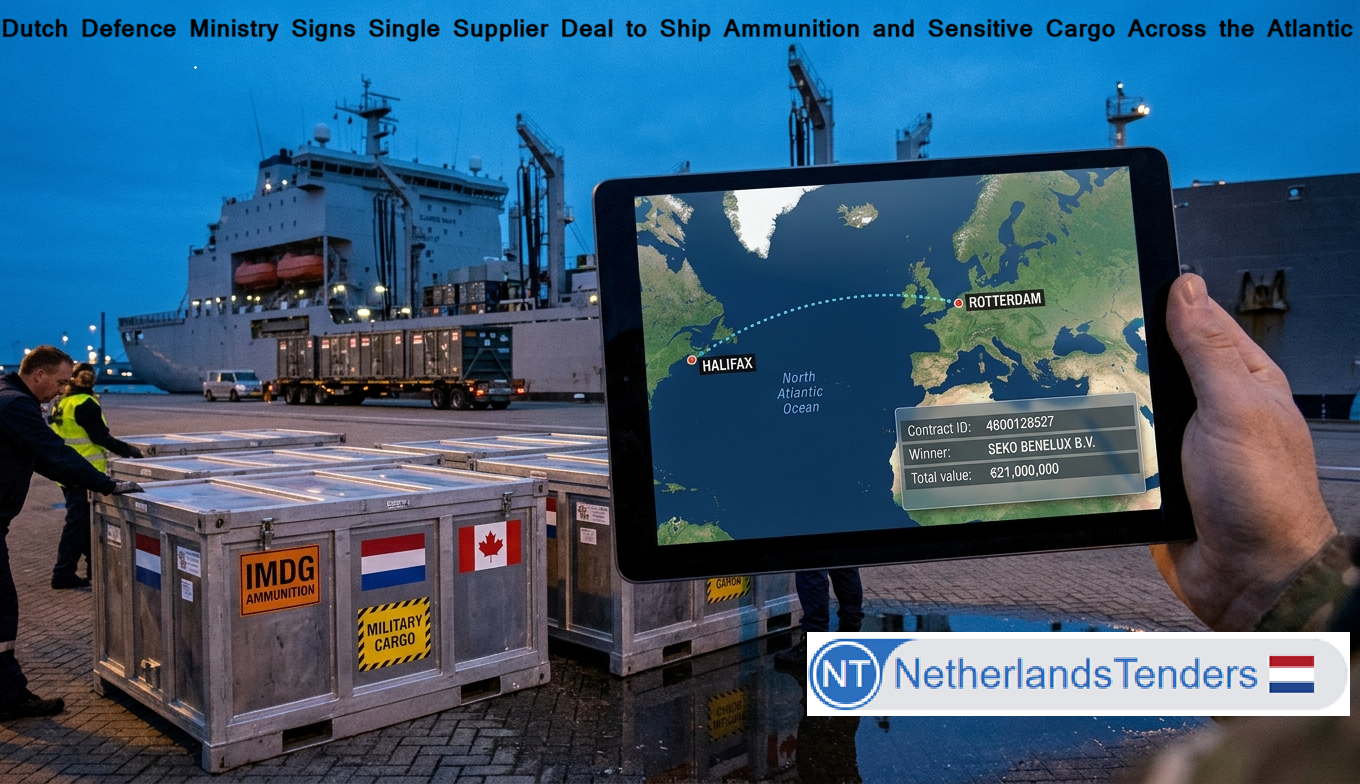
Dutch Defence Ministry Signs Single Supplier Deal to Ship Ammunition and Sensitive Cargo Across the Atlantic
04 Aug 2026
Standfirst The Dutch Ministry of Defence has awarded Seko Benelux B.V. a framework agreement to handle ad hoc sea transport of military cargo, including ammunition and other sensitive or oversized loads, between the Netherlands and Belgium and the east coast of the United States and Canada. Only one supplier bid for the contract, which carries an estimated value of EUR 21 000 000 but a stated ceiling of EUR 50 000 000. Introduction Moving military equipment across an ocean is never a routine shipping job. Loads can be oversized, security sensitive or classified as dangerous goods under international maritime rules and the cargo described in this Dutch defence contract includes exactly that mix, right down to ammunition moving alongside standard containers. The Netherlands has now locked in a single logistics partner, Seko Benelux B.V., to handle this transatlantic transport on an ad hoc, call off basis whenever the need arises. The tender ran under EU defence procurement rules, attracted exactly one bid and leaves a notable gap between what the Ministry expects to spend and the ceiling it has built into the contract. Why This Contract Matters The Dutch Ministry of Defence describes a regular, ongoing need to move cargo between the Netherlands and Belgium and the east coast of North America, on an ad hoc basis tied to single containers or other materiel dispatched per call off within a set timeframe. The notice is explicit that this cargo is often security sensitive, both to transport and to discuss openly and frequently falls outside standard shipping categories, including out of gauge loads that exceed normal container dimensions and IMDG classified materiel, the international code covering dangerous goods at sea, among which the notice specifically names ammunition. That specificity matters. A logistics provider handling this kind of cargo needs the certifications, security clearances and operational experience to move dangerous and oversized military goods internationally, a considerably narrower capability set than general container shipping, which likely explains much of what follows in this tender's competitive outcome. Contract Timeline Intended framework start date, per the buyer's own documentation: 1 January 2026 Contract concluded: 30 July 2026 Notice dispatched to the Publications Office: 3 August 2026 Published in the Official Journal, OJ S 148/2026: 4 August 2026 Contract Overview The Ministry of Defence ran a restricted procedure under the EU's defence and security procurement directive for sea transport of military materiel between the Netherlands and or Belgium and the United States and or Canada and back, including the pre and onward transport legs needed to move cargo to and from port. Only one tender was submitted, from Seko Benelux B.V., which was selected as the sole framework supplier. The framework is structured without reopening of competition, meaning the Ministry will issue individual call offs directly to Seko Benelux under the agreed terms rather than running further competitions for each shipment. Its base term is 3 years, with the buyer holding two separate options, each exercisable unilaterally, to extend the agreement by a further 2 years under unchanged conditions, for a potential total term of up to 7 years. Key Contract Details Contracting authorityMinisterie van Defensie (Dutch Ministry of Defence) Contract titleSea transport from the Netherlands and or Belgium to the United States and or Canada and vice versa, including pre and onward transport CPV code60600000, Water transport services Procedure typeRestricted procedure Legal basisDirective 2009/81/EC, the EU Defence and Security Procurement Directive Estimated and re-estimated valueEUR 21 000 000, excluding VAT Framework maximum value (lot result field)EUR 50 000 000, excluding VAT, not matched by the estimated or notice level figures Base contract term3 years, intended start 1 January 2026 Renewal optionsUp to 2 renewals of 2 years each, maximum total term 7 years Award criteriaQuality, implementation plan and price, lowest acceptable bid; no percentage weighting disclosed Tenders received1, submitted electronically WinnerSeko Benelux B.V. Contract signed30 July 2026 EU fundingYes, project fully or partially financed with EU funds Framework structureFramework agreement without reopening of competition SubcontractingNo Review bodyRechtbank Den Haag (The Hague District Court) Complaints received0 Notice reference539200 2026, OJ S 148/2026, published 4 August 2026 Project Scope The contract covers sea transport of military materiel between the Netherlands and or Belgium and the United States and or Canada and the return journey, including the pre and onward transport legs that move cargo to and from the relevant ports. The Ministry describes the underlying need as regular but ad hoc: individual shipments of single containers or other materiel, dispatched per call off, that must be executed within a specified timeframe rather than on a fixed recurring schedule. The cargo itself is described in some detail. It frequently includes materiel that is security sensitive both to transport and to discuss and often falls into non standard categories, specifically out of gauge cargo that exceeds normal container dimensions and IMDG classified materiel, the international maritime code for dangerous goods, which the notice states includes ammunition. The contracting authority directs further technical detail to separate tender documentation not included in this notice. About the Contracting Authority The Ministerie van Defensie, the Dutch Ministry of Defence, is based in The Hague and is classified in this notice as a contracting entity for procurement purposes. Its contact for this tender was Renate Bloemsma Bomhof. As the Netherlands' national defence ministry, it manages logistics and equipment movement in support of the Dutch armed forces, including the international sea and land transport arrangements covered by this contract. About the Organisations Involved Ministerie van Defensie As covered above, the Ministry of Defence is the buyer for this contract and is also the organisation that signed it and the body providing further information about the procurement procedure. Rechtbank Den Haag Rechtbank Den Haag, The Hague District Court, is named as the review organisation and the body providing further information on review procedures. The notice directs suppliers to a separate selection guide document for specific detail on review deadlines rather than stating them directly. Seko Benelux B.V. Seko Benelux B.V., based in Rozenburg in the Netherlands, is the sole tenderer and winner of this contract. The notice lists Michel Melbourne as its contact point. Seko Benelux operates as part of the broader Seko Logistics group, an international freight forwarding and logistics network, giving it access to the kind of global shipping infrastructure and specialised handling capability that transatlantic military cargo movement typically requires. Procurement Analysis The Ministry ran this as a restricted procedure under the EU's defence and security procurement directive, a route that requires interested suppliers to qualify before submitting a full tender, appropriate for a contract involving security sensitive cargo and dangerous goods handling. Only one supplier reached the tendering stage and submitted a bid, a strikingly narrow field even accounting for the specialised nature of the work. Award criteria combined a quality assessment, described only as an implementation or approach plan with further detail held in separate documentation and a price criterion structured around a lowest acceptable bid threshold rather than a simple lowest price comparison. That structure, sometimes called best price quality ratio with a floor price mechanism, suggests the Ministry wanted assurance that bids were not just cheap but operationally credible, though the notice does not disclose the specific weighting applied between the two criteria. The value figures in this notice do not fully align. The estimated value, the re-estimated value recorded against the lot result and the notice level maximum framework figure all agree at EUR 21 000 000. Only the lot result's own maximum framework value field states a considerably higher EUR 50 000 000, more than double the figure appearing everywhere else in the notice. The contracting authority has not explained this outlier and readers should treat EUR 21 000 000 as the more consistently supported figure across the document, while noting the EUR 50 000 000 ceiling as a separate, unreconciled data point. Additional Procurement Facts This project is confirmed as fully or partially financed with EU funds, though the notice does not identify the specific funding programme involved. Subcontracting is marked as not applicable for the winning tender. No complaints were recorded against this award. The framework's intended start date of 1 January 2026 predates both the contract's actual conclusion date of 30 July 2026 and this notice's publication, indicating a gap between the planned commencement and the completed award process. Market and Industry Perspective Specialised military logistics, particularly transatlantic movement of dangerous goods and oversized cargo, sits in a genuinely narrow segment of the freight forwarding market. Providers need the security clearances, handling certifications and carrier relationships to move ammunition and other IMDG classified materiel internationally, a combination relatively few logistics firms maintain at the scale a national defence ministry requires. A single bid outcome in a restricted procedure is consistent with that reality, even allowing for the additional step of a pre-qualification stage designed specifically to filter for exactly this kind of capability. Seko Benelux's position within a larger international logistics network is likely a relevant factor in its ability to meet these requirements, since global freight forwarding groups typically maintain the breadth of carrier relationships and specialised handling capacity needed for this kind of contract. Economic Significance At an estimated EUR 21 000 000 over a term that could run as long as seven years with both renewal options exercised, this is a meaningful but specialised logistics commitment for the Dutch Ministry of Defence, supporting its ability to move equipment and supplies to and from North America as operational needs require. The unresolved EUR 50 000 000 ceiling figure, if it does reflect a genuine contractual maximum, would represent a substantially larger potential commitment, underlining why the discrepancy is worth watching rather than dismissing. Future Procurement Opportunities The framework's two available 2 year renewal options give the Ministry natural review points, likely around 2029 and again around 2031 if both are exercised, before any full recompete becomes necessary. Given the apparent narrowness of the supplier field this time, other logistics providers considering this market should treat the intervening years as time to build the specific certifications and capabilities this contract category demands. Opportunities for Suppliers Freight forwarders and logistics providers with dangerous goods handling certification, security clearance capability and established transatlantic shipping networks should treat this notice as confirmation that the Dutch Ministry of Defence maintains ongoing demand in this category. With only one bidder competing this time, providers who can credibly meet the security and handling requirements may find a considerably more open field whenever this framework is eventually retendered. What Businesses Should Watch Whether the Ministry of Defence clarifies or corrects the discrepancy between the EUR 21 000 000 estimated value and the EUR 50 000 000 framework maximum figure. Which EU funding programme, once disclosed, supports this contract and whether that signals a broader EU financed defence logistics initiative worth monitoring. Whether the Ministry exercises either of its two available 2 year renewal options as the base term progresses. Broader Dutch and European defence ministry demand for specialised dangerous goods and oversized cargo logistics, given the narrow supplier field this tender revealed. NetherlandsTenders.com Procurement Intelligence This award illustrates a pattern common to specialised defence logistics procurement: a legally open, EU regulated tender process that nonetheless produces a single viable bidder, because the practical requirements, security clearances, dangerous goods certification and established international shipping capacity, do the real work of narrowing the field long before any formal evaluation begins. Suppliers considering this market should recognise that winning this kind of contract starts with building the underlying operational capability, not with tender stage price competition. The unresolved value discrepancy in this notice, a fourfold gap between the figure that appears in three separate places and the one that appears in a fourth, is also a useful reminder that even well established defence ministries produce imperfect procurement records. Businesses relying on TED data to assess contract scale should treat outlier figures with appropriate scepticism and, where possible, seek confirmation directly from the buyer before making commercial decisions based on a single disputed number. Strategically, this contract's EU funding status is worth flagging as an open question for further research. Confirmation that a bilateral Dutch Belgian military logistics contract carries EU financing, without a disclosed programme name, invites closer attention to how European funding mechanisms are supporting national defence logistics arrangements that extend well beyond Europe's own borders. Supplier Takeaways This restricted procedure attracted only one tender, reflecting how narrow the qualified supplier pool is for dangerous goods and oversized military cargo logistics. Award criteria combined a quality implementation plan with a lowest acceptable bid price threshold, rather than a simple lowest price comparison. The contract's value figures do not fully reconcile, with a EUR 21 000 000 estimate appearing alongside an unexplained EUR 50 000 000 ceiling in one section of the notice. The framework can run for up to seven years if both available two year renewal options are exercised. Providers with dangerous goods certification and established transatlantic freight networks are well positioned for future opportunities in this category. Key Takeaways The Dutch Ministry of Defence awarded Seko Benelux B.V. a framework agreement for transatlantic sea transport of military cargo, including ammunition and other sensitive or oversized materiel. Only one tender was received in this restricted procedure under the EU's defence and security procurement directive. The estimated contract value is EUR 21 000 000, though a separate field in the notice records an unreconciled EUR 50 000 000 framework maximum. The framework runs for a base term of 3 years with up to two further 2 year renewal options, for a potential total of 7 years. The project is confirmed as financed at least partly with EU funds, though the specific programme is not disclosed. No complaints were recorded and the contract operates without reopening of competition. Conclusion Behind a modest sounding shipping contract sits a genuinely specialised corner of defence logistics: moving ammunition, oversized loads and other sensitive military cargo across the Atlantic on demand, a job few logistics providers are equipped to bid for at all. Seko Benelux B.V. now holds that role alone for the Dutch Ministry of Defence, in a contract whose true scale, somewhere between twenty one and fifty million euro depending on which figure in the notice is right, remains one open question among several this award leaves for suppliers and observers to watch. Source: Tenders Electronic Daily (TED), Contract Award Notice 539200 2026, Official Journal of the European Union, OJ S 148/2026, published on 4 August 2026. Contracting authority: Ministerie van Defensie (Dutch Ministry of Defence)
View Details