Rijkswaterstaat Names Van der Lee to Keep the Eems Shipping Channel Clear
14 Aug 2026
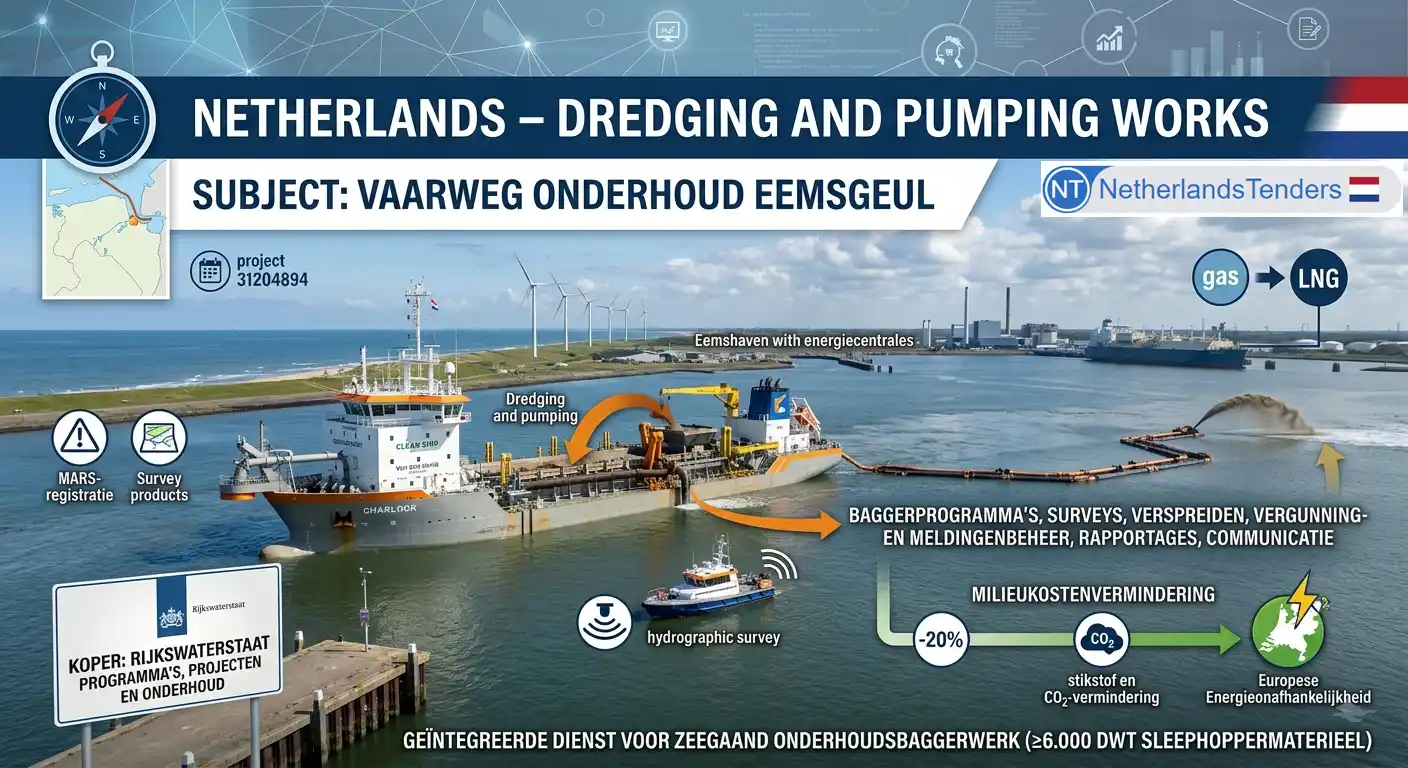
Standfirst The Dutch national infrastructure agency Rijkswaterstaat has awarded a three year maintenance dredging contract worth 23.9 million euros for the Eems fairway to Fa. Gebr. Van der Lee. The contract keeps the shipping channel connecting the North Sea to Eemshaven clear for maritime traffic and drew six competing tenders. Introduction Shipping channels do not stay open on their own. Sediment builds up constantly and without regular dredging, a fairway like the one connecting the North Sea to the Dutch port of Eemshaven would gradually become too shallow for the vessels that depend on it. Rijkswaterstaat, the Dutch government agency responsible for the country's major waterways and infrastructure, has just secured a contractor to keep that specific channel navigable for the next several years. Why This Contract Matters The Eems fairway is a critical maritime access route in the northern Netherlands, connecting the North Sea to Eemshaven, a significant Dutch port near the German border. Keeping this route at safe navigable depth directly affects the vessels, cargo and maritime activity that rely on it. Beyond the physical dredging work, this contract also covers monthly surveying, dredging programme planning and supplying area data that supports the creation of Electronic Navigation Charts, the digital charts vessels rely on for safe passage, making the winning contractor a genuine ongoing partner in the channel's management rather than a one-off works contractor. Contract Timeline The contract was concluded on 3 August 2026. The notice recording this award was dispatched on 13 August 2026 and published in the Official Journal of the European Union on 14 August 2026, under OJ S issue 156/2026. The contract runs for 36 months, with an option to extend by a further year. Contract Overview Rijkswaterstaat Programma's, Projecten en Onderhoud ran an open procedure under Directive 2014/24/EU for maintenance dredging and pumping works, classified under CPV code 45252124, Dredging and pumping works. The place of performance is recorded across multiple administrative NUTS regions spanning the northern Netherlands, reflecting the broader regional jurisdiction under which this specific coastal and estuary work falls. Six tenders were received. The winning bid, from Fa. Gebr. Van der Lee, came in at 23,921,000.00 EUR, matching the notice's confirmed value of all contracts awarded exactly. Key Contract Details Contracting AuthorityRijkswaterstaat Programma's, Projecten en Onderhoud Winning BidderFa. Gebr. Van der Lee Contract Title31204894 Vaarweg onderhoud Eemsgeul (Waterway maintenance, Eems fairway) Procedure TypeOpen procedure, not accelerated Legal BasisDirective 2014/24/EU CPV Code45252124 Dredging and pumping works Awarded Value (excl VAT)23,921,000.00 EUR Award CriteriaBest price quality ratio (price and quality); specific point weighting not disclosed in this notice, deferred to the separate tender guide Contract Duration36 months, with a 1 year renewal option Tenders Received6, all submitted electronically, 1 from an SME EU FundingNot financed with EU funds Covered by GPAYes SubcontractingNo Contract Concluded3 August 2026 Place of PerformanceEems fairway near Eemshaven, Groningen and surrounding northern Netherlands administrative area Project Scope The contractor must carry out maintenance dredging based on an agreed dredging programme across three specific areas: the Eems to North Sea fairway, the Eemshaven access channel and designated passing lanes and waiting areas used by vessels. Beyond the physical dredging, the scope includes monthly surveys of the dredging zones, drafting a proposed dredging programme based on those surveys, carrying out work verification surveys and supplying area data that supports Rijkswaterstaat's role as asset manager and enables production of Electronic Navigation Charts. The contractor is also responsible for arranging necessary permits and notifications and keeping stakeholders informed during dredging operations. About the Contracting Authority Rijkswaterstaat Programma's, Projecten en Onderhoud Rijkswaterstaat Programma's, Projecten en Onderhoud is registered as a central government authority with housing and community amenities as its classified activity, based in Utrecht. Rijkswaterstaat is the executive agency of the Dutch Ministry of Infrastructure and Water Management, responsible for the country's major roads, waterways and water management infrastructure, including the maintenance of critical shipping channels like the Eems fairway. About the Organisations Involved Fa. Gebr. Van der Lee Fa. Gebr. Van der Lee, based in Hagestein in the Utrecht region and classified as a medium sized enterprise, won this contract with a tender value of 23,921,000.00 EUR. The tender was not formally ranked against competitors in the notice's records and no subcontracting was declared, meaning Van der Lee will carry out the dredging and associated survey and reporting work directly. Procurement Analysis Rijkswaterstaat ran this as an open procedure and received six competing tenders, a solid competitive field for a specialised maritime dredging contract of this kind. The award criteria description confirms the contract was decided on a best price quality ratio basis, referred to in Dutch procurement practice as BPKV, combining price and quality documentation submitted with each tender. Notably, the specific point weighting for both the price and quality criteria is recorded as zero in this notice, with the actual assessment method and achievable financial value per criterion instead described in a separate tender guide, the aanbestedingsleidraad. This is a data gap worth flagging directly: the notice itself does not disclose how heavily price versus quality actually factored into the final decision and interested parties would need to consult the underlying tender documentation for that detail. Additional Procurement Facts The contract is not financed with EU funds and is covered by the Government Procurement Agreement. No framework agreement or dynamic purchasing system applies. Complaints about the procurement procedure are first directed to Rijkswaterstaat's central complaints point for tendering, with further recourse available through the Civil Court in The Hague. Market and Industry Perspective Maintenance dredging of critical Dutch shipping channels is a specialised, recurring category of infrastructure work and Rijkswaterstaat's use of a multi year contract with a built in renewal option reflects the ongoing, cyclical nature of sediment management in tidal and estuarine environments like the Ems. Six tenders received for a contract of this technical specificity suggests a healthy competitive market of Dutch dredging and maritime civil works contractors capable of delivering this kind of work. Economic Significance At close to 24 million euros over three years, with a possible fourth year if the renewal option is exercised, this is a substantial ongoing infrastructure maintenance commitment supporting maritime access to Eemshaven, a significant northern Dutch port. Future Procurement Opportunities The disclosed one year renewal option is the clearest near term development to watch, offering Van der Lee continuity beyond the initial three year term without a new competitive tender. Beyond that, Rijkswaterstaat will need to run a fresh tender for this fairway's maintenance once the contract, including any extension, eventually concludes. Opportunities for Suppliers Dredging and maritime civil works contractors interested in future Rijkswaterstaat waterway maintenance tenders should note the strong competitive field this specific contract attracted and should ensure familiarity with the agency's aanbestedingsleidraad tender guide documents, since detailed award methodology is consistently published there rather than in the summary notice itself. What Businesses Should Watch Dredging contractors and maritime infrastructure firms should watch for whether Rijkswaterstaat exercises its one year renewal option on this contract and should monitor for similar waterway maintenance tenders covering other Dutch shipping channels and port access routes as they come up for renewal. NetherlandsTenders.com Procurement Intelligence This award illustrates the routine but essential infrastructure work that keeps Dutch maritime trade routes functional, recurring maintenance dredging contracts that rarely attract public attention but directly determine whether ports like Eemshaven remain accessible to shipping. Its strategic importance lies in the breadth of responsibility handed to the winning contractor, extending well beyond physical dredging into surveying, data management supporting navigation chart production and stakeholder communication. This reflects a broader trend of Rijkswaterstaat structuring its waterway maintenance contracts as integrated management relationships rather than narrow works only engagements. Suppliers can draw a practical lesson from the way award criteria were disclosed in this notice: the headline notice recorded a zero point weighting for both price and quality criteria, with the real evaluation methodology reserved for the separate tender guide. Firms competing for future Rijkswaterstaat contracts should always treat the published notice as a starting point and consult full tender documentation directly, since critical evaluation detail is often not reproduced in the summary award notice itself. Supplier Takeaways Six tenders were received for this specialised maritime dredging contract, indicating solid competitive interest The award criteria description confirms a best price quality ratio evaluation, though specific point weightings are not disclosed in the notice itself The contract scope extends beyond dredging into surveying, data management and navigation chart support, reflecting an integrated management relationship A one year renewal option exists beyond the initial three year term No subcontracting was declared, indicating the winning contractor will deliver all scope directly Key Takeaways Rijkswaterstaat has awarded a 23,921,000.00 EUR maintenance dredging contract for the Eems fairway to Fa. Gebr. Van der Lee The contract covers dredging of the Eems to North Sea fairway, the Eemshaven access channel and passing and waiting areas Six tenders were received and the contract runs for 36 months with a possible 1 year extension The contract is covered by the Government Procurement Agreement but not financed with EU funds No subcontracting was declared by the winning contractor Conclusion This contract keeps one of the northern Netherlands' key maritime access routes open for the vessels that depend on it, an essential but often invisible piece of infrastructure maintenance. For Fa. Gebr. Van der Lee, it is a substantial multi year engagement combining hands on dredging work with an ongoing data and stakeholder management role. For the wider Dutch dredging sector, this award confirms continued demand for specialised maintenance contractors capable of servicing the country's critical shipping channels, work that will remain necessary for as long as ships need clear water to reach Dutch ports. Source: Tenders Electronic Daily (TED), Contract Award Notice 565072-2026, Official Journal of the European Union, OJ S issue 156/2026, published on 14/08/2026.
View Details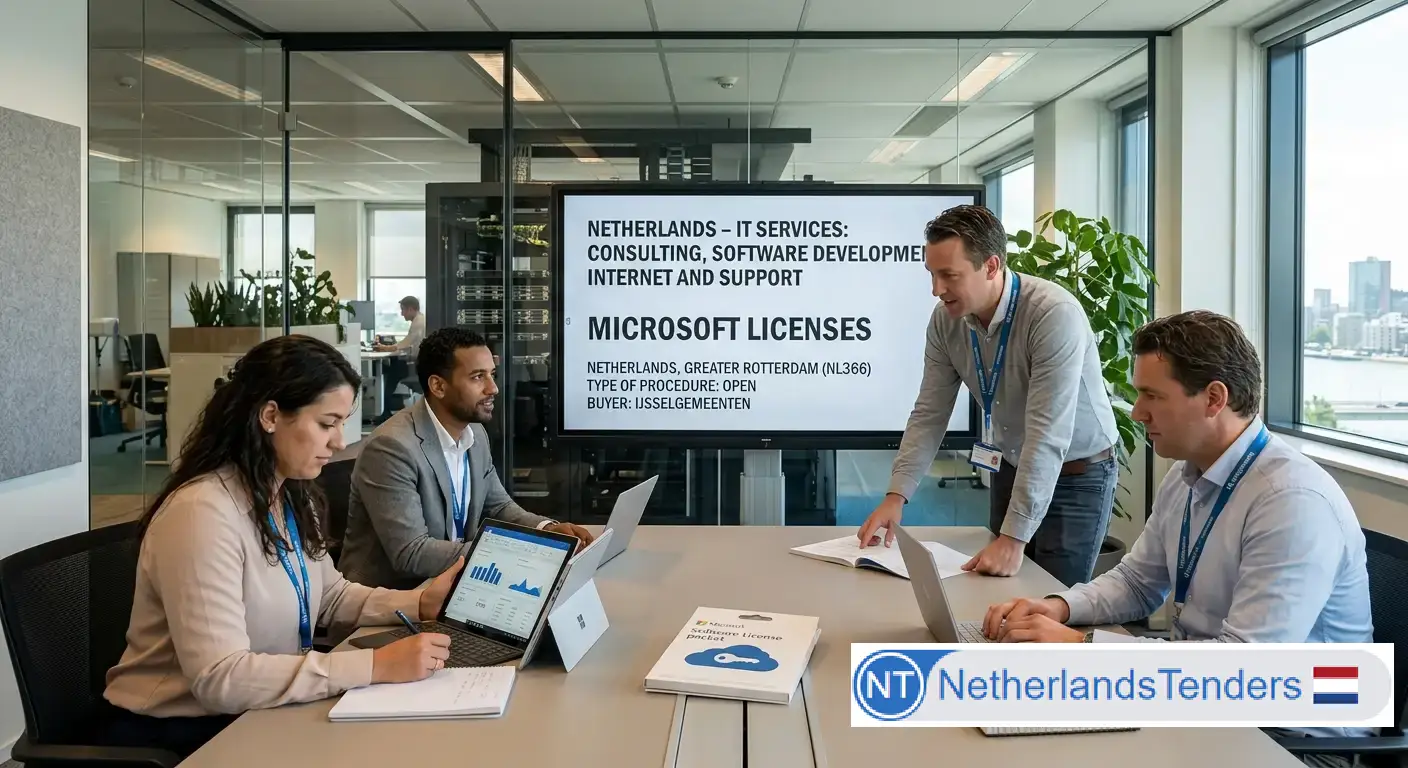
Netherlands Municipality Selects Bechtle for Microsoft Licensing Framework Worth Up to EUR 5.2 Million
13 Aug 2026
Standfirst IJsselgemeenten has selected Bechtle B.V. to supply Microsoft licences under a framework arrangement linked to the agreement between VNG and Microsoft. The six year contract has an estimated value of EUR 1.176 million excluding VAT but a maximum framework value of EUR 5.2 million which highlights the difference between expected procurement demand and the ceiling available under the arrangement. Introduction For public sector organisations and municipalities and software licensing is increasingly a long term procurement issue rather than a simple annual purchase. Licence volumes can change with workforce requirements and software adoption and organisational needs can evolve over several years. That context sits behind the Netherlands procurement by IJsselgemeenten for Microsoft licences. The organisation sought a suitable licensing service provider using the framework agreed between VNG and Microsoft. The resulting award went to Bechtle B.V. after an open procedure in which one tender was submitted. The contract was concluded on 19 March 2026 after Bechtle was selected on 17 March. The framework is scheduled to begin on 1 July 2026 and has an initial duration of six years with one possible two year extension. Why This Contract Matters The procurement illustrates how public sector software expenditure can be structured around a multi year framework rather than repeated standalone licensing purchases. The model gives the buyer a mechanism for obtaining Microsoft licences over an extended period while retaining the possibility of competition through reopening of competition under the framework. The financial structure is particularly important. IJsselgemeenten estimates the value of the framework at EUR 1.175975 million excluding VAT while the maximum value recorded for the framework is EUR 5.2 million. The higher figure should not be interpreted as guaranteed spending or supplier revenue. It represents the maximum value available under the framework as recorded in the notice. The award also shows how strongly price can influence public sector licensing procurement. Price accounted for 100 percent of the award criterion and the winning supplier was selected on the basis of the lowest price among eligible offers. Contract Timeline 17 March 2026: Bechtle B.V. was selected as the winner. 19 March 2026: The contract was concluded between IJsselgemeenten and Bechtle B.V. 1 July 2026: The framework agreement is scheduled to begin. 13 August 2026: Contract award notice 563428 2026 was published in OJ S issue 155 2026. Contract Overview BuyerIJsselgemeenten ContractP1 Microsoft Licenties WinnerBechtle B.V. LotLOT 0000 SectorIT services CPV72000000 IT services: consulting software development Internet and support Estimated value excluding VATEUR 1,175,975 Maximum framework valueEUR 5,200,000 Initial duration6 years ExtensionOne possible extension of 2 years ProcedureOpen procedure Award criterionPrice with 100 percent weighting Tenders received1 Framework modelFramework agreement with reopening of competition EU fundingNo GPA coverageYes Performance locationCapelle aan den IJssel Netherlands Project Scope The procurement covers the supply of Microsoft licences through a licensing service provider. IJsselgemeenten stated that the procurement would use the framework agreed between VNG and Microsoft. The notice also refers to a pricing sheet containing the Microsoft software and licences currently used by the organisation and their quantities. However the notice explicitly states that the listed quantities do not create rights for the supplier. This distinction matters for suppliers. The pricing information provides an indication of current requirements but does not amount to a guaranteed purchasing volume. Actual demand can therefore differ from the quantities referenced during the procurement. The contract falls under CPV code 72000000 which covers IT services including consulting software development Internet services and support. In commercial terms the procurement sits within the broader public sector IT services market while its immediate requirement is Microsoft licensing. About the Contracting Authority IJsselgemeenten IJsselgemeenten is the contracting authority and the organisation signing the contract. The notice classifies it as a body governed by public law and identifies its activity as general public services. Its address is in Capelle aan den IJssel in the Groot Rijnmond region of the Netherlands. IJsselgemeenten also provided information about the procurement procedure and review process. The notice identifies Rechtbank Rotterdam as the review organisation. About the Organisations Involved Bechtle B.V. Bechtle B.V. is the successful tenderer and winner of LOT 0000. The notice classifies the company as a large economic operator and records its registered location in Eindhoven in the Zuidoost Noord Brabant region of the Netherlands. Bechtle submitted the only tender received for the procurement and no subcontracting was reported for the tender. The notice does not disclose any consortium or joint venture structure. VNG VNG is referenced in the procurement description because IJsselgemeenten intended to use the framework that VNG agreed with Microsoft. The notice does not provide additional organisational information about VNG or assign a separate delivery responsibility to it for the awarded contract. Microsoft Microsoft is referenced in the notice as the other party associated with the framework mentioned by IJsselgemeenten. The procurement itself concerns Microsoft software and licences. The notice does not identify Microsoft as the awarded supplier or assign it a direct delivery role under the contract between IJsselgemeenten and Bechtle B.V. Rechtbank Rotterdam Rechtbank Rotterdam is identified as the review organisation for the procurement. The notice lists it as an additional contact point associated with the review function. Procurement Analysis The procurement used an open procedure and was not accelerated. The legal basis recorded in the notice is Directive 2014/24/EU. The procedure therefore provided an open route for suppliers to submit tenders while the evaluation mechanism remained straightforward. The most significant competitive signal is the number of bids. Only one tender was submitted. The notice records one electronically submitted tender and no tender from a micro small or medium sized tenderer. It also records zero complainants. With price carrying the entire 100 percent weighting the procurement did not use a disclosed technical or quality scoring component in its award criterion. The notice states that the economically most advantageous tender was determined on the basis of the lowest price shown in the pricing sheet. If several bidders had submitted exactly the same lowest price the final winner would have been determined by drawing lots. For suppliers this creates a clear commercial signal. Competitive positioning depended heavily on pricing discipline and the ability to meet the procurement requirements without being excluded. At the same time the absence of multiple bids means the result provides limited evidence about the broader market price level for this particular requirement. Additional Procurement Facts The procurement contains one lot covering Microsoft licences. The initial estimated duration is six years and the buyer has one renewal option of two years. The framework uses reopening of competition. This is different from a simple fixed purchase because the framework structure can allow further competitive processes in accordance with its rules. The notice does not provide additional detail on the future call off process beyond identifying the framework as one with reopening of competition. No dynamic purchasing system is used. The procurement is also not financed with EU funds and the notice states that it is covered by the Government Procurement Agreement. Market & Industry Perspective Public sector software licensing creates a procurement market where buyers need to balance long term continuity with changing technology requirements. A six year initial term gives the supplier visibility over a substantial procurement relationship while the framework structure provides the buyer with a mechanism for managing future requirements. The procurement also demonstrates the importance of established licensing frameworks in public sector technology purchasing. Rather than treating every licence requirement as an isolated transaction the buyer is using an existing framework relationship associated with VNG and Microsoft and selecting a licensing service provider through a formal procurement process. For technology resellers and licensing service providers the award reinforces the importance of understanding public sector framework structures. The commercial opportunity is not defined only by the initial estimated value because the framework ceiling is materially higher. However the ceiling itself does not guarantee that the full amount will be purchased. Economic Significance The estimated framework value of EUR 1.176 million represents a substantial multi year technology procurement for the organisation. The maximum framework value of EUR 5.2 million is more than four times the estimated value and indicates the potential scale of purchasing that the framework could accommodate if future requirements justify it. The difference between these figures is important for procurement intelligence. Suppliers should distinguish between forecast demand and the contractual ceiling when assessing the commercial value of public sector framework awards. Because the procurement is not EU funded the expenditure is not presented in the notice as part of a specific EU financed technology programme. Instead it is a direct public sector procurement for licensing requirements. Future Procurement Opportunities The six year initial term and possible two year extension indicate that the buyer is planning for a long procurement horizon. The presence of a renewal option means the commercial relationship could continue beyond the initial term if the option is exercised. The framework structure also creates an opportunity for suppliers to monitor future competition events linked to licensing requirements. The notice specifically identifies reopening of competition as part of the framework model. Suppliers should therefore watch IJsselgemeenten procurement activity and related Dutch public sector framework opportunities rather than treating this award as a single closed transaction. Opportunities for Suppliers Microsoft licensing service providers should monitor Dutch public sector framework opportunities involving software licensing. Suppliers should build pricing models that can remain competitive over long contract periods. Businesses should distinguish estimated framework demand from the maximum contractual ceiling when assessing potential revenue. Technology suppliers should understand how reopening of competition can affect future access to work under a framework. SMEs should note that this procurement received no SME tender and assess whether future framework opportunities create more accessible routes into the market. What Businesses Should Watch Future competition events connected to the Microsoft licensing framework. Any change in the licensing quantities or software requirements of IJsselgemeenten. Whether the buyer exercises the two year extension option. Future Dutch public sector procurements using similar licensing frameworks. Changes in procurement structures that alter how public sector organisations buy software licences. NetherlandsTenders.com Procurement Intelligence This award represents a broader procurement trend in which public sector organisations are treating software licensing as a structured multi year commercial requirement. The combination of a long initial duration and a framework mechanism gives the buyer a way to plan for continuity while retaining a procurement route for future requirements. The strategic importance of the award lies less in its headline EUR 5.2 million ceiling than in the procurement architecture behind it. The buyer has separated estimated demand from the maximum framework value and has embedded reopening of competition into the framework structure. For suppliers this means that winning one procurement does not necessarily represent the entire commercial opportunity in the category and that future competition mechanisms can remain important. The single tender result is another important signal. A price only evaluation with one submission suggests that supplier participation was limited in this particular procurement. The notice does not establish why only one tender was received so suppliers should not assume that the market lacks competition based solely on this award. Businesses seeking similar contracts should position around competitive licensing economics and strong knowledge of public sector procurement mechanisms. They should also monitor framework based opportunities early because the ability to participate in future competition can depend on the procurement structure chosen by the buyer. Future contracts in this market may increasingly focus on structured licensing arrangements that allow public organisations to accommodate changing software requirements without returning to the market for every individual licence purchase. The six year duration and possible extension in this case demonstrate the buyer's preference for a longer procurement horizon. Supplier Takeaways Bechtle B.V. won the only lot after submitting the only tender received. Price was the sole award criterion with a 100 percent weighting. The estimated value is EUR 1.175975 million excluding VAT. The maximum framework value is EUR 5.2 million and should not be treated as guaranteed expenditure. The initial duration is six years with one possible two year extension. The framework uses reopening of competition. No subcontracting was reported. No SME tender was received. Suppliers should monitor future framework competition and related Dutch public sector licensing requirements. Key Takeaways IJsselgemeenten has selected Bechtle B.V. for Microsoft licensing services. The procurement covers one lot under CPV 72000000. The contract was awarded on 17 March 2026 and concluded on 19 March 2026. The framework is scheduled to start on 1 July 2026. The procurement was conducted through an open procedure. Only one tender was received. The framework has an estimated value of EUR 1.175975 million and a maximum value of EUR 5.2 million. The procurement was not financed with EU funds and was covered by the GPA. The award provides a useful example of how public sector software licensing can be organised through a long term framework. Conclusion IJsselgemeenten's Microsoft licensing award is a relatively focused procurement but its structure offers useful insight into the wider public sector technology market. The six year term and possible extension point to a long term licensing relationship while the framework model creates a mechanism for future competition. For suppliers the most important lesson is to look beyond the headline contract value. The difference between the estimated EUR 1.176 million value and the EUR 5.2 million maximum framework ceiling shows why procurement intelligence must distinguish expected demand from potential contractual capacity. The single tender and price only evaluation also make competitive pricing a central feature of this award. Source: Tenders Electronic Daily (TED), Contract Award Notice 563428-2026, Official Journal of the European Union, published on 13 August 2026.
View Details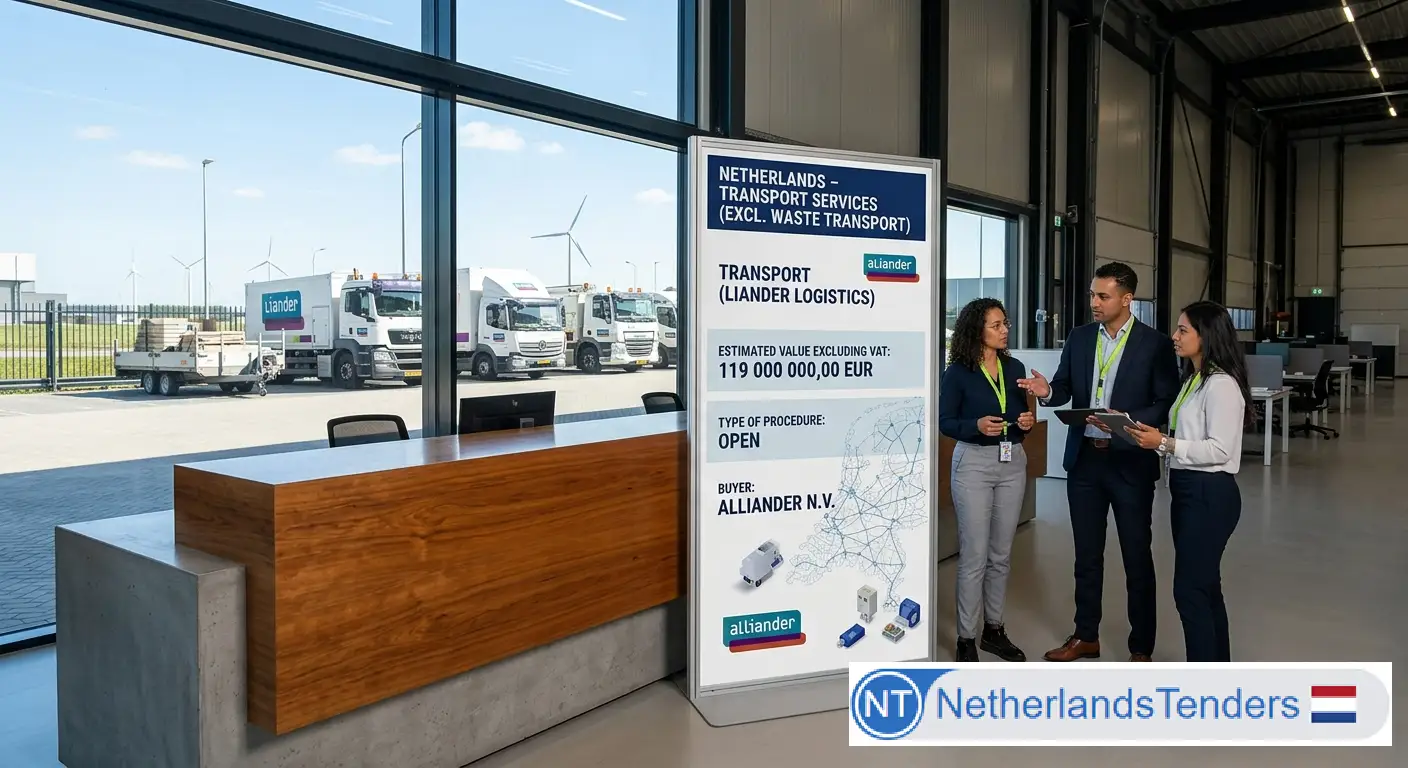
Liander Locks In Three Transport Partners to Keep the Dutch Power Grid's Supply Chain Moving, But Won't Say for How Much Until 2030
12 Aug 2026
Standfirst Alliander N.V., parent company of Dutch grid operator Liander, has awarded three nine year transport contracts worth up to a combined EUR 181 000 000 to Schotpoort Connect, Klomp Transport Zwolle and Zwatra, covering everything from pallet deliveries to crane lifted transformers. The individual winning bid prices, however, will stay confidential until 2030. Introduction Every cable, transformer and fitting that goes into upgrading the Dutch electricity grid has to get from a warehouse to a work site first, on the right day, at the right time, in the right vehicle. Liander, the grid operator serving large parts of the Netherlands, runs that logistics operation through a central distribution centre in Apeldoorn and three regional cable storage hubs and has just locked in the transport partners who will keep it running for years to come. Three companies split the work: Schotpoort Connect for smaller, palletised deliveries and Klomp Transport Zwolle and Zwatra for the heavier lifting, literally, moving oversized materials and transformers that require a truck mounted crane to load, unload and install. Notably, none of the actual winning prices are public yet and won't be until 2030. Why This Contract Matters Grid construction and maintenance depends on a functioning supply chain as much as it depends on engineers and electricians. Liander's own description of this contract makes the stakes plain: this transport network also handles emergency callouts when power fails somewhere in its service area, meaning the contractors chosen here are not just moving routine deliveries but supporting the grid operator's ability to respond to outages. The contract's structure, splitting standard distribution work from specialised crane transport and further separating routine crane jobs from the more complex work of placing transformers in medium voltage substations, reflects how much planning and coordination sits behind what looks, from the outside, like simple haulage. Contract Timeline Winner selected, all three lots: 1 June 2026 Contract concluded, Lot 1: 1 July 2026 Notice dispatched to the Publications Office: 11 August 2026 Published in the Official Journal, OJ S 154/2026: 12 August 2026 Base framework term: 4 years, extendable to a maximum of 9 years Individual winning tender values scheduled for future publication: 31 August 2030 Contract Overview Alliander ran an open procedure under the EU's Utilities Directive for transport services supporting Liander's logistics operations, split into three lots. Lot 1 covers distribution transport of smaller, typically palletised materials. Lots 2 and 3 cover crane transport, the movement of large or heavy materials requiring a truck mounted crane, with Lot 3 specifically covering station work, the more complex task of placing equipment like transformers into medium voltage substations, which requires advance site surveys, planning with Liander's project managers and coordination with other parties on site. Three tenders were received for Lot 1, five for Lot 2 and three for Lot 3. Schotpoort Connect B.V. won Lot 1, Klomp Transport Zwolle B.V. won Lot 2 and Zwatra B.V. won Lot 3. Kisjes Transport B.V. competed but did not win any lot. None of the winning tender values have been published; Alliander cites the commercial interests of the economic operators as justification, with publication scheduled for 31 August 2030. Key Contract Details Contracting authorityAlliander N.V. (Liander Logistiek) Contract titleTransport (Liander Logistiek) CPV code60000000, Transport services (excluding waste transport) Procedure typeOpen procedure Legal basisDirective 2014/25/EU, the Utilities Directive Combined estimated value, all 3 lotsEUR 119 000 000, excluding VAT Combined maximum framework value, all 3 lotsEUR 181 000 000, excluding VAT Base framework term4 years Renewal optionsTwo renewals of 2 years each, plus one further 1 year renewal for a transition phase, maximum total term 9 years Tenders received3 for Lot 1, 5 for Lot 2, 3 for Lot 3 WinnersSchotpoort Connect (Lot 1), Klomp Transport Zwolle (Lot 2), Zwatra (Lot 3) Winning tender valuesUnpublished, citing commercial interests, scheduled for publication 31 August 2030 Winner selected1 June 2026, all lots GPA coverageYes Framework structureFramework agreement without reopening of competition, single supplier per lot SubcontractingNo Review bodyRechtbank Den Haag (The Hague District Court) Notice reference559742 2026, OJ S 154/2026, published 12 August 2026 Project Scope Lot 1, Distribution, covers physical transport of small materials in routes from the Central Distribution Centre in Apeldoorn to delivery locations across Liander's service area, including returning packaging materials like pallets, servicing both staffed and unstaffed locations, executing same day relocation orders between arbitrary pickup and delivery points and responding to urgent callouts during outages. It carries an estimated value of EUR 29 000 000 and a maximum framework value of EUR 44 000 000. Lot 2, Regular Crane Transport, covers movement of large or heavy materials requiring a truck mounted crane for loading and unloading, estimated at EUR 72 500 000 with a maximum of EUR 110 000 000, the largest of the three lots by a considerable margin. Lot 3, Crane Transport Station Work, covers the more specialised task of transporting and placing equipment such as transformers into medium voltage substations, requiring advance planning, site surveys and on site coordination with other contractors, estimated at EUR 17 500 000 with a maximum of EUR 27 000 000. All three lots operate from the same underlying network: Liander's Central Distribution Centre in Apeldoorn, plus three cable storage hubs in Apeldoorn Woudhuis, Marknesse and the Amsterdam area. About the Contracting Authority Alliander N.V. is a Dutch grid operator group active in electricity related activities, with its logistics function operating under the Liander brand. Alliander manages electricity and gas distribution infrastructure across large parts of the Netherlands and Liander Logistiek is the internal function responsible for ensuring construction and maintenance materials reach the right location at the right time to support the group's network operations. About the Organisations Involved Alliander N.V. As covered above, Alliander is the buyer for all three lots and is also the organisation that signed each resulting contract and provides further procedural information. Rechtbank Den Haag The Hague District Court is named as the review organisation for this contract, with review deadline detail deferred to the underlying tender documentation. Schotpoort Connect B.V. Schotpoort Connect B.V. won Lot 1, distribution transport, the highest volume, most frequent category of deliveries under this contract, moving smaller materials from Liander's central distribution centre to delivery points across its service area. Klomp Transport Zwolle B.V. Klomp Transport Zwolle B.V., based in Zwolle, won Lot 2, regular crane transport, the largest lot by value in this award, covering movement of large and heavy grid materials requiring specialised crane equipped vehicles. This lot also drew the most competitive interest, with five tenders submitted. Zwatra B.V. Zwatra B.V., based in Delft, won Lot 3, crane transport station work, the most technically demanding category, covering the placement of equipment such as transformers into medium voltage substations, work that requires site surveys, project coordination and specialised lifting equipment beyond standard crane transport. Kisjes Transport B.V. Kisjes Transport B.V., based in Apeldoorn, competed for this contract but did not win any of the three lots. Procurement Analysis Alliander ran a standard open procedure under the Utilities Directive, appropriate for its status as a regulated grid operator. Each of the three lots is structured as a framework agreement without reopening of competition, meaning the single winning supplier per lot holds that work exclusively for the contract term rather than competing in ongoing mini competitions. The framework's renewal structure is notably deliberate: a 4 year base term, followed by two 2 year renewal options, plus a distinct final 1 year renewal specifically earmarked for a transition phase, suggesting Alliander has built in explicit runway for winding down or handing over the contract smoothly whenever its maximum 9 year term eventually concludes. The decision to withhold all three winning tender values is worth explaining rather than treating as a data gap. Alliander has formally invoked the commercial interests of the winning economic operators as justification, a legitimate basis under EU procurement transparency rules and has committed to a specific future publication date of 31 August 2030. This is a considerably more transparent approach to withheld pricing than simply omitting the information without explanation, even though it means market observers cannot currently assess how competitively priced these contracts were relative to their estimated values. Additional Procurement Facts All three lots are confirmed as covered by the Government Procurement Agreement. None of the three winning tenders involve subcontracting or variant bids. Award criteria are not disclosed in this notice, with detail deferred to the underlying tender documentation. The combined lot values sum exactly to the procedure level totals, EUR 119 000 000 estimated and EUR 181 000 000 maximum, with no discrepancy between the two levels of reporting. Market and Industry Perspective Specialised grid logistics, particularly crane transport for oversized electrical equipment like transformers, sits in a genuinely narrow segment of the Dutch transport and logistics market, requiring specific vehicle types, crane operating capability and, for station work, technical coordination skills beyond standard haulage. The five tenders received for the crane transport lot suggest a reasonably active competitive field even within this specialised niche, more so than the three tenders each received for the distribution and station work lots. Utility logistics contracts of this scale and duration also reflect the sustained, long term capital investment Dutch grid operators are making to expand and upgrade electricity infrastructure, work that depends on reliable, high volume materials logistics running in the background. Economic Significance At a combined estimated value of EUR 119 000 000, rising to a possible EUR 181 000 000 across a term that could run nine years, this is a substantial, multi year logistics commitment supporting the physical build out and maintenance of part of the Dutch electricity grid. For the three winning transport companies, it represents a long term, diversified revenue base spanning both routine and highly specialised transport work. Future Procurement Opportunities With a 4 year base term and staged renewal options extending to 9 years, including a dedicated 1 year transition phase renewal, Alliander has built multiple natural review points into this contract before any full recompete becomes necessary, likely placing the next major opportunity for other transport companies toward the end of the next decade. Opportunities for Suppliers Transport and logistics companies serving the Dutch utilities sector should note the clear specialisation Alliander has built into this contract's structure, separating standard palletised distribution from crane transport and further separating routine crane work from complex substation equipment placement. Firms with specific crane operated vehicle fleets and technical coordination capability for utility installations are best positioned for future opportunities of this kind. What Businesses Should Watch The eventual publication of winning tender values in 2030, which will allow retrospective assessment of how competitively these contracts were priced. Whether Alliander exercises its renewal options as the base 4 year term approaches its conclusion. Broader Dutch grid operator investment in logistics and materials handling capacity as electricity network expansion continues. Competitive dynamics in the Dutch specialised crane transport market, given the five bidder field seen for Lot 2. NetherlandsTenders.com Procurement Intelligence This contract is a useful example of how utility operators structure long term logistics partnerships around genuinely distinct operational needs, rather than bundling dissimilar work into a single generic transport contract. Separating routine distribution from specialised crane transport and further isolating the most technically demanding substation work, lets Alliander match each category to a supplier with the right specific capability, rather than forcing a single contractor to be equally strong across very different logistics challenges. The deferred publication of winning bid values is also worth noting as a transparency practice other utility buyers might reasonably adopt. Rather than leaving pricing data permanently undisclosed, Alliander has committed to a specific future date, giving the market eventual visibility into contract economics while protecting commercially sensitive figures during the period when that sensitivity is most acute. For logistics companies, the strategic lesson is that specialisation, not scale alone, appears to be what wins contracts of this kind. Three different companies won three different lots, none sweeping the full contract, suggesting Alliander evaluated each category on its own specific technical merits rather than defaulting to a single preferred large scale logistics provider. Supplier Takeaways Alliander split this contract into three functionally distinct lots, rewarding specialisation over broad scale, with three different companies each winning a different lot. Winning tender values are withheld until 2030, a disclosed and justified confidentiality practice rather than a data gap. The crane transport lot drew the most competitive interest, with five tenders, compared with three each for the distribution and station work lots. The framework's staged renewal structure, including a dedicated transition phase renewal, signals Alliander's deliberate planning for an eventual smooth handover at contract end. Technical capability for specialised work, such as substation equipment placement, appears to be a genuine differentiator separate from standard crane transport capability. Key Takeaways Alliander awarded three transport framework agreements for Liander's logistics operations, worth a combined estimated EUR 119 000 000 and a maximum of EUR 181 000 000. Schotpoort Connect won distribution transport, Klomp Transport Zwolle won regular crane transport and Zwatra won crane transport station work. Winning tender values are not currently published, with disclosure scheduled for 31 August 2030 to protect commercial interests. Each framework runs a 4 year base term, extendable to a maximum of 9 years through staged renewal options. Tender competition ranged from three to five bidders per lot. All three contracts operate without reopening of competition, giving each winning supplier exclusive rights to their lot for the contract term. Conclusion Keeping the Dutch electricity grid under construction and repair depends on unglamorous but essential logistics and Liander has now secured that capability for the better part of a decade across three specialised transport partners. The prices behind these deals will stay under wraps for four more years, but the structure itself, splitting routine deliveries from crane lifted transformers, tells its own story about just how much careful planning sits behind getting the right material to the right substation at the right time. Source: Tenders Electronic Daily (TED), Contract Award Notice 559742-2026, Official Journal of the European Union, OJ S 154/2026, published on 12 August 2026.
View Details