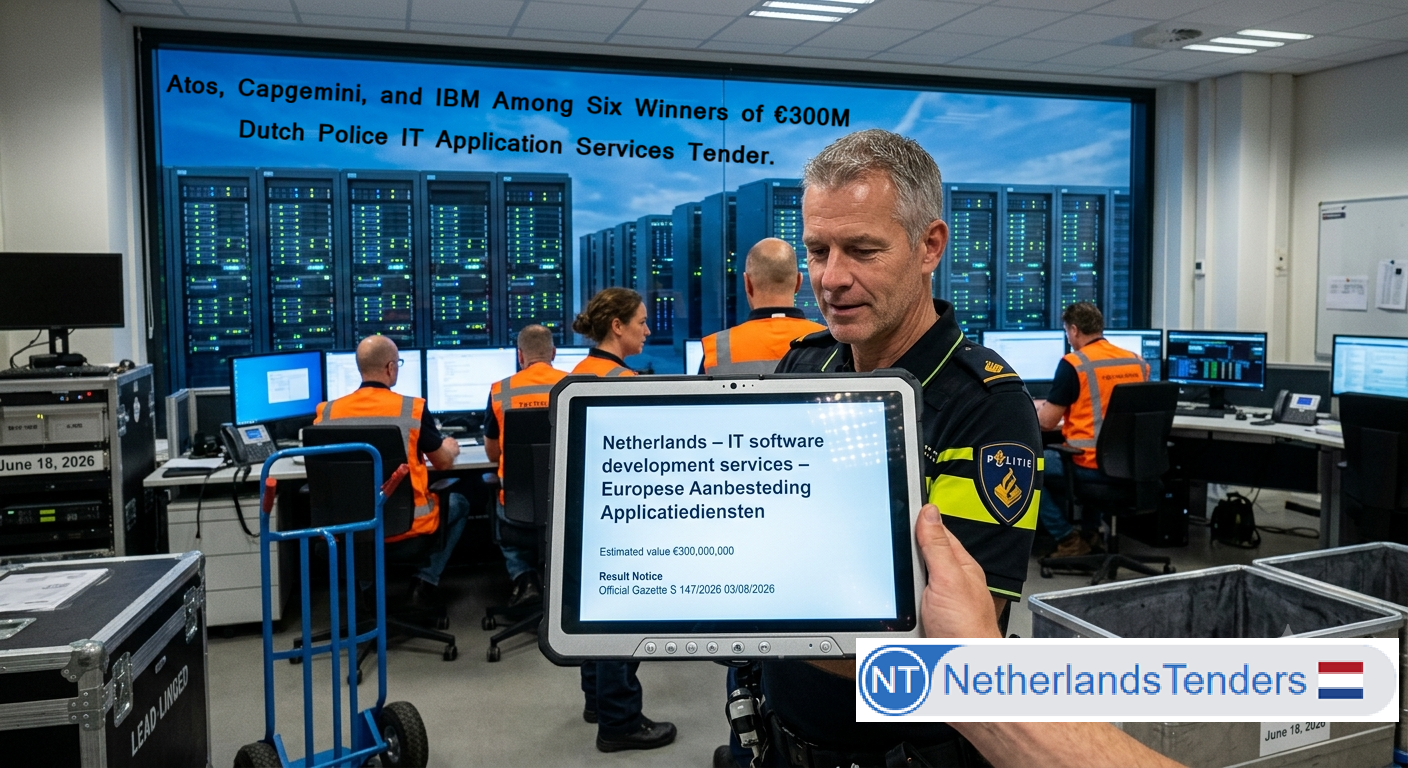
Dutch National Police Locks In Six Suppliers for a EUR 300 Million Software Development Framework, Under Defence Procurement Rules
03 Aug 2026
Standfirst Politie, the Dutch National Police, has awarded a framework agreement worth up to EUR 300 000 000 for application development and management services to six suppliers, including global technology groups Atos, Capgemini, CGI, IBM and Sopra Steria alongside the smaller Dutch specialist Info Support. The tender was run under the EU's defence and security procurement rules rather than standard public sector rules and drew one formal complaint. Introduction Modern policing runs on software as much as it runs on patrol cars, from the systems officers use on a mobile device at a roadside stop to the platforms that support investigations behind the scenes. Keeping that software built, maintained and secure across an organisation the size of the Dutch National Police is a continuous, large scale undertaking and one Politie has just secured through a framework agreement covering up to EUR 300 000 000 in application development and management services. Six suppliers now sit on that framework, a mix of five internationally recognised technology and consulting groups and one considerably smaller Dutch software specialist. The tender ran not under the EU's general public procurement directive but under its defence and security directive, a legal detail that says as much about the sensitivity of police IT systems as any description in the notice itself. Why This Contract Matters Application services for a national police force sit at the intersection of everyday public service delivery and national security. The notice describes the work as covering the development and management of applications supporting the police's safety objectives, deployable across desktop and mobile platforms and, in the buyer's own words, whatever digital communication channel becomes standard next. That is a broad, open ended mandate, reflecting how central software has become to modern law enforcement. The choice to run this procurement under the EU's defence and security procurement directive, rather than its general public sector equivalent, is itself a signal. That legal basis is typically reserved for contracts involving sensitive security interests and it shapes which suppliers can realistically participate and how much operational detail the buyer discloses publicly. Contract Timeline Original tender procedure referenced by this result: a previously published restricted procedure notice Contracts concluded with all six winning suppliers: 18 June 2026 Notice dispatched to the Publications Office: 1 July 2026 Published in the Official Journal, OJ S 147/2026: 3 August 2026 Contract Overview Politie ran a restricted procedure, a two stage process in which suppliers first apply to participate before a shortlist is invited to submit full tenders, for a framework agreement covering application development and management services. The framework carries an estimated and maximum value of EUR 300 000 000, running for a base term of 4 years with an option to extend by up to 2 years, for a potential total term of 6 years. Twelve tenders were submitted at the final stage, of which six suppliers were appointed to the framework: Atos Netherlands B.V., Capgemini Nederland B.V., CGI Nederland B.V., IBM Nederland B.V., Info Support B.V. and Sopra Steria Nederland B.V. All six share the same contract identifier and the same conclusion date, 18 June 2026, under a framework structured without reopening of competition, meaning individual assignments will be allocated directly among the six suppliers rather than through further mini competitions. Key Contract Details Contracting authorityPolitie (Dutch National Police) Contract titleEuropese Aanbesteding Applicatiediensten (application services) CPV code72212517, IT software development services Procedure typeRestricted procedure Legal basisDirective 2009/81/EC, the EU Defence and Security Procurement Directive Estimated and maximum framework valueEUR 300 000 000, excluding VAT Base contract term4 years Renewal optionUp to 2 years, maximum total term 6 years Award criteriaQuality 80 points, price 20 points Tenders received12, all submitted electronically WinnersAtos Netherlands, Capgemini Nederland, CGI Nederland, IBM Nederland, Info Support, Sopra Steria Nederland Contract concluded18 June 2026, all six suppliers EU fundingNo Green procurement criteriaNone applied Framework structureFramework agreement without reopening of competition, six suppliers Review and mediation bodyRechtbank Den Haag (The Hague District Court) Complaints received1 Notice reference535203-2026, OJ S 147/2026, published 3 August 2026 Project Scope The framework covers what the notice terms application services, encompassing all services for developing, further developing and managing applications for the police that support its safety objectives. These services can be deployed across any platform or communication channel currently in use by the police or that may come into use in future, from desktop systems to mobile devices and beyond. The notice also references contract options but directs bidders to separate documentation for their description, so the specific scope of those options is not disclosed publicly. The buyer confirms accessibility criteria for people with disabilities were not included, on the grounds that the procurement is not intended for use by natural persons directly, consistent with this being backend and operational software infrastructure rather than a citizen facing public service. About the Contracting Authority Politie is the Dutch National Police, based in The Hague. Its procurement for this framework was coordinated through a contact point identified as Mandy Beekhuizen, with the buyer's procurement platform hosted through Mercell. As the national police force, Politie procures software and IT infrastructure that must meet operational security requirements distinct from typical civilian government IT purchasing, a distinction reflected directly in this tender's legal basis under the EU's defence and security procurement rules. About the Organisations Involved Politie As covered above, Politie is the buyer for this framework and is also the organisation that signed each of the six resulting contracts and the body providing further information about the procurement procedure and offline access to the tender documents. Rechtbank Den Haag The Hague District Court is named as both the review organisation and the mediation organisation for this contract and is also listed as the body providing information on the general regulatory frameworks for tax, environmental protection and employment conditions applicable to the contract. This dual review and mediation role, combined with the broader regulatory information function, gives the court a wide ranging role in this procurement beyond simply hearing disputes. Atos Netherlands B.V. Atos Netherlands B.V., based in Amstelveen, is one of six winning suppliers. Atos is an internationally recognised IT services and digital transformation group with an established presence in the Dutch public sector market. Capgemini Nederland B.V. Capgemini Nederland B.V., based in Utrecht, is another of the six winners. Capgemini is a major global consulting and technology services group with a long standing footprint in Dutch government IT contracts. CGI Nederland B.V. CGI Nederland B.V., based in Rotterdam, rounds out the group of large international winners. CGI is a global IT and business consulting services firm active across the Dutch public and private sectors. IBM Nederland B.V. IBM Nederland B.V., based in Amsterdam, is the fourth large multinational technology group among the six winners, reflecting IBM's continued role as a major supplier to large scale government software programmes. Info Support B.V. Info Support B.V., based in Veenendaal, is the clear outlier among the six winners: a considerably smaller, specialist Dutch software development firm winning a place alongside five of the world's largest IT and consulting groups. Its inclusion suggests the evaluation genuinely rewarded technical and quality criteria rather than defaulting to scale, consistent with the tender's heavy 80 percent weighting on quality. Sopra Steria Nederland B.V. Sopra Steria Nederland B.V., based in Nieuwegein, is the sixth and final winning supplier, another internationally active technology and consulting group with an established Dutch public sector business. Procurement Analysis Politie ran this as a restricted procedure, a route that requires interested suppliers to first qualify before being invited to tender, a structure well suited to complex, security sensitive contracts where the buyer wants to control who can access detailed technical requirements. Twelve suppliers reached the tendering stage and exactly half were appointed to the resulting six supplier framework. Award criteria weighted quality heavily, at 80 points against price at 20 points. That ratio signals a buyer prioritising technical capability, delivery methodology and supplier competence well above cost competitiveness, appropriate for software work supporting operational police functions where reliability and security carry more weight than marginal price differences. The framework operates without reopening of competition, meaning Politie will allocate individual assignments directly among the six appointed suppliers under pre agreed terms rather than running further competitive rounds for each piece of work. With six parallel suppliers rather than one or two, the police retain flexibility to match specific projects to whichever supplier's expertise best fits, while maintaining competitive tension across the panel for future framework renewals. One complaint was recorded against this contract award. The notice does not disclose who filed it or on what grounds and readers should treat this as an open, unresolved data point rather than an indication of any particular outcome. Additional Procurement Facts The contract is confirmed as not financed with EU funds and applies no Green Public Procurement criteria. Four of the six winners, Atos, Capgemini, IBM and Sopra Steria, are recorded as permitting subcontracting under the framework, specifically the possibility of engaging third parties for future call off assignments, though the value or percentage of that subcontracting is not yet known in any case. Subcontracting status for CGI Nederland and Info Support is recorded as not yet known. The tender's use of Directive 2009/81/EC, the defence and security procurement directive, rather than the general public sector directive, is itself a notable procurement fact, reflecting the security sensitive nature of police application development. Market and Industry Perspective This award offers a clear snapshot of which suppliers currently hold standing positions in the Dutch government's most security sensitive IT contracts. Five of the six winners are internationally recognised technology and consulting groups with deep existing relationships across Dutch public administration, while Info Support's inclusion shows that specialist domestic firms can still secure a place on major national security related frameworks when their technical proposal holds up under a quality dominant evaluation. The use of defence and security procurement rules for police software development work may also reflect a broader pattern across EU member states, where law enforcement and public safety technology increasingly sits closer to national security procurement than to conventional civilian government IT purchasing, with corresponding implications for which suppliers can compete and how much detail buyers disclose. Economic Significance At up to EUR 300 000 000 over a term that could extend to 6 years, this is one of the larger IT services frameworks in the Dutch public sector, reflecting the scale of software development and management work required to support a national police force's operations. Spread across six suppliers, the framework also distributes that spending across a meaningful cross section of the Dutch technology consulting market rather than concentrating it with a single provider. Future Procurement Opportunities Politie's option to extend the framework by up to two years gives the police a natural review point before any full recompete, likely around the four year mark of the base term. Given the framework's six supplier structure and lack of reopening competition, the more immediate opportunity for other suppliers may be positioning for that eventual renewal or recompete, rather than expecting mini competitions during the framework's current term. Opportunities for Suppliers IT services and software development firms serving the Dutch public sector should note both the scale of this framework and its selection profile. With quality weighted four times as heavily as price and a smaller specialist firm winning a place alongside major multinationals, this tender suggests genuine openings exist for suppliers who can demonstrate strong technical capability, even without the scale of the largest global consulting groups. What Businesses Should Watch How the six appointed suppliers are allocated work under the no reopening framework structure as individual assignments are issued. Whether the recorded complaint leads to any published review outcome affecting this award. Whether Politie exercises its option to extend the framework by up to two years as the base term progresses. Broader use of the EU's defence and security procurement directive for law enforcement technology contracts across other member states. NetherlandsTenders.com Procurement Intelligence This award illustrates how national security considerations are increasingly shaping even routine seeming government IT procurement. A software application development framework, the kind of contract that might otherwise run under standard public procurement rules, was instead processed under the EU's defence and security directive, with a restricted, invitation based tendering process and a heavily quality weighted evaluation. Suppliers targeting law enforcement and public safety technology contracts should expect this pattern to become more common as digital systems become more central to operational policing. The presence of Info Support alongside five global technology groups is a useful data point for smaller specialist firms considering whether to compete for large national framework contracts. An 80 percent quality weighting evidently created room for a technically strong, more focused competitor to win a position that might otherwise default to scale, suggesting well prepared specialist bidders should not assume large frameworks like this one are inaccessible. Strategically, the six supplier, no reopening structure means the real competition among these winners will now play out in how assignments are allocated over the framework's life, likely rewarding suppliers who build strong working relationships with Politie's project teams rather than those who simply hold a place on the panel. Firms not appointed this time should treat the framework's four year base term as their planning horizon for the next competitive opportunity. Supplier Takeaways This framework was decided on an 80 percent quality, 20 percent price basis, rewarding technical capability well above cost competitiveness. A smaller specialist Dutch firm, Info Support, won a place alongside five major international technology groups, showing scale is not a prerequisite for this kind of framework. The contract was procured under the EU's defence and security procurement directive rather than standard public sector rules, reflecting its security sensitive nature. Twelve suppliers reached the final tendering stage and six were appointed, roughly a fifty percent success rate at that stage. The framework operates without reopening of competition, so future work will be allocated directly among the six winners rather than through further competitive rounds. Key Takeaways Politie awarded a framework worth up to EUR 300 000 000 for application development and management services to six suppliers. Winners are Atos Netherlands, Capgemini Nederland, CGI Nederland, IBM Nederland, Info Support and Sopra Steria Nederland. The tender was procured under the EU's defence and security procurement directive, via a restricted procedure with 12 tenders received. Award criteria weighted quality at 80 percent and price at 20 percent. The framework runs for a 4 year base term with an option to extend by up to 2 years. One formal complaint was recorded against the award, with no further detail disclosed. Conclusion Behind a routine sounding software services framework sits one of the more consequential Dutch public sector IT awards of the year: a EUR 300 million commitment, run under rules typically reserved for defence and security sensitive contracts and won by a deliberately assembled panel of six suppliers spanning the largest global technology groups and one focused domestic specialist. How Politie allocates work across that panel over the coming years will say a great deal about which kind of supplier, global scale or specialist depth, proves most valuable to the country's policing infrastructure. Source: Tenders Electronic Daily (TED), Contract Award Notice 535203-2026, Official Journal of the European Union, OJ S 147/2026, published on 3 August 2026. Contracting authority: Politie (Dutch National Police)
View Details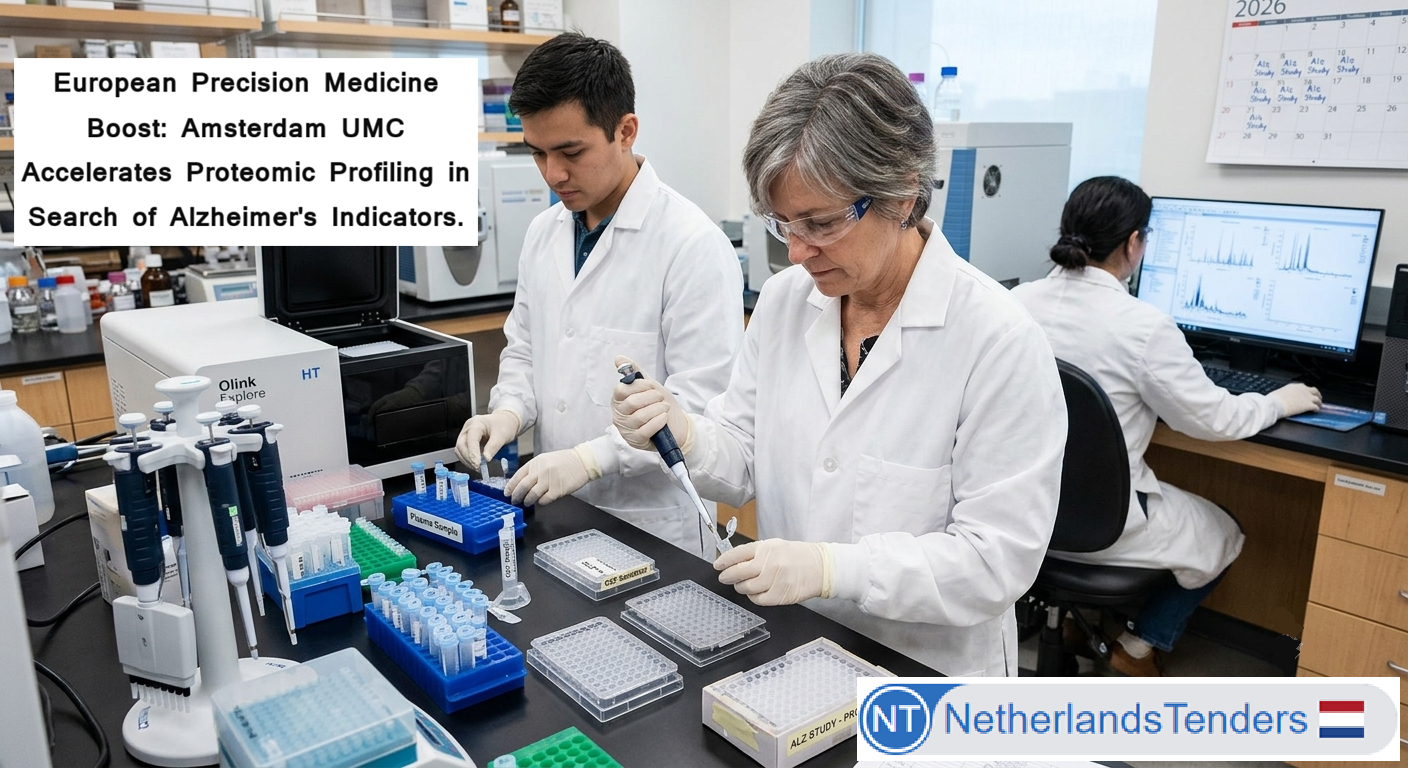
Amsterdam UMC's Alzheimer Center Turns to a French Biomarker Lab for a Rare Proteomics Platform, More Than a Year After the Deal Was Signed
31 Jul 2026
Standfirst Stichting Amsterdam UMC has published the result of a fast tracked tender to analyse nearly 2 300 cerebrospinal fluid and blood plasma samples for its Alzheimer Center, awarding the work to Firalis Molecular Precision SA, a French contract research organisation and one of the few labs in Europe running the specialised Olink Explore HT proteomics platform. The notice, however, reports a contract that was actually signed back in March 2025 and contains two value figures that do not reconcile. Introduction Finding reliable biological signals for Alzheimer's disease before symptoms become severe is one of the more active frontiers in neurology research and it depends heavily on measuring proteins in blood and spinal fluid at a scale and precision that only a handful of specialised laboratories can deliver. Amsterdam UMC's Alzheimer Center, one of Europe's larger academic dementia research groups, needed exactly that kind of capacity for a batch of 600 cerebrospinal fluid samples and 1 634 plasma samples. The resulting contract went to Firalis Molecular Precision SA, a French biomarker focused contract research organisation based near Basel, using a proteomics technology platform specific enough that it likely shaped who could realistically bid at all. The notice publishing that result surfaced only this week, though the underlying contract dates back to March 2025 and its numbers do not entirely add up. Why This Contract Matters Large scale protein biomarker analysis, known as proteomics, is central to current Alzheimer's research, helping scientists identify which proteins in blood or spinal fluid correlate with disease progression, a step toward earlier, less invasive diagnosis. A dataset spanning more than 2 200 samples processed on a single high throughput platform gives Amsterdam UMC's researchers a substantial, consistently generated resource for that work. The procurement route matters too. Amsterdam UMC ran this as an accelerated open procedure, justified by a market consultation and a voluntary transparency notice that had already taken place beforehand. That combination typically signals a buyer that has already identified a very narrow, possibly single viable supplier before formally tendering, using the transparency notice to protect the award from legal challenge. For suppliers watching how hospitals and research centres buy specialised scientific services, that is a meaningful signal in itself. Contract Timeline Prior market consultation referenced in the notice: TenderNed reference TN 501065 Prior voluntary transparency notice referenced in the notice: TenderNed reference TN 504115 Winner selected and contract concluded: 24 March 2025 Notice dispatched to the Publications Office: 30 July 2026 Published in the Official Journal, OJ S 146/2026: 31 July 2026 Contract Overview Stichting Amsterdam UMC, the foundation behind Amsterdam's university medical centre, ran an accelerated open procedure for protein analysis of plasma and cerebrospinal fluid samples tied to its Alzheimer Center, described in the notice as covering 600 CSF samples and 1 634 plasma samples, to be carried out by a single operator. The main technical feature specified in the notice is analysis on the Olink Explore HT platform, a specific next generation proteomics technology. The contract runs for a compressed 64 day duration, structured as a single, one off service contract rather than a framework agreement. Firalis Molecular Precision SA, based in Huningue in eastern France, won the contract as the sole named tenderer. The notice records the value of the winning tender at EUR 1 099 571, while separately stating that the value of all contracts awarded in this notice is EUR 12 277 356, a figure more than ten times larger. The contracting authority has not explained this gap and both figures are reported here as they appear in the notice rather than reconciled into one. Key Contract Details Contracting authorityStichting Amsterdam UMC Contract titleProteomics Alzheimercentrum CPV code85148000, Medical analysis services Procedure typeOpen procedure, accelerated Legal basisDirective 2014/24/EU Value of the winning tenderEUR 1 099 571 Value of all contracts awarded in this noticeEUR 12 277 356, a figure not reconciled with the tender value above Scope600 cerebrospinal fluid samples and 1 634 plasma samples Technology specifiedOlink Explore HT proteomics platform Contract duration64 days Award criteriaPrice, single criterion, 100 percent Tenders received2 total, of which 1 was submitted electronically and 0 from an SME, per the notice's own breakdown WinnerFiralis Molecular Precision SA Winner size classificationLarge enterprise Winner selected and contract signed24 March 2025 GPA coverageYes EU fundingNo Framework structureNo framework agreement, single contract Complaints received0 Notice reference530090 2026, OJ S 146/2026, published 31 July 2026 Project Scope The contract covers protein analysis of 600 cerebrospinal fluid samples and 1 634 plasma samples for Amsterdam UMC's Alzheimer Center, to be carried out by a single supplier on the Olink Explore HT platform, a proteomics panel capable of measuring several thousand proteins from a very small sample volume. The notice states that the exact place of performance is unknown and depends on the winning supplier, reflecting the fact that this kind of specialised laboratory analysis is typically carried out at the supplier's own facility rather than on site at the buyer. The tender's main features description names the Olink Explore HT platform specifically, rather than describing the required output in generic terms. That level of technical specificity narrows the realistic supplier field considerably, since relatively few contract research organisations in Europe operate this particular platform. About the Contracting Authority Stichting Amsterdam UMC is the foundation operating Amsterdam University Medical Center, a body governed by public law active in the health sector. It is based at De Boelelaan 1117 in Amsterdam, with its procurement contact listed as Marja Ramkema and a separate contact point for this specific tender, the Director of Strategic Procurement at Amsterdam UMC, represented by N. Laghrich Baaddi. The organisation's listed web address for this tender, vumc.nl, reflects Amsterdam UMC's origins in the merger of the Academic Medical Center and VU University Medical Center. Amsterdam UMC's Alzheimer Center is among the larger academic dementia research groups in Europe and this tender's biomarker analysis work sits within that centre's broader research programme. About the Organisations Involved Stichting Amsterdam UMC As covered above, Stichting Amsterdam UMC is the buyer for this contract and, unusually, also fills every other organisational role disclosed in the notice: it is named as the organisation providing additional information about the procedure, the review organisation, the organisation providing information on review procedures, the mediation organisation and the organisation that signed the contract. No external review body, such as a court, is separately named. Firalis Molecular Precision SA Firalis Molecular Precision SA, the sole winner, is based in Huningue, in the Haut Rhin region of eastern France near the Swiss and German borders and is classified in the notice as a large enterprise. Independent company information describes Firalis Molecular Precision as a contract research organisation offering multi omics laboratory services, including proteomics, genomics and transcriptomics and states that the company became the first in France to offer the Olink Explore HT panel following its acquisition of the technology in late 2023. The same sources describe Firalis as an initiator of a large EU funded biomarker research consortium and note that the company joined a larger biosciences group in February 2026. This background is consistent with the tender's specific requirement for Olink Explore HT capability and helps explain why the field of eligible bidders for this contract was likely very narrow. Procurement Analysis Amsterdam UMC ran this as an accelerated open procedure, a route that shortens standard tendering deadlines. The justification given is that a market consultation and a voluntary transparency notice had already taken place before this tender was launched. A voluntary transparency notice is a mechanism EU buyers use to proactively publish an intended award, most often when they believe competition is genuinely limited to one or very few suppliers, in order to reduce the legal risk of a later challenge. Its presence here, alongside the highly specific Olink Explore HT technology requirement, points toward a procurement designed around a supplier field that was already understood to be narrow before the open procedure was launched. Consistent with that reading, the award criteria disclosed in the notice consist of a single criterion, price, worth 100 percent of the score. Once the technical requirement effectively pre selects for labs running a specific, uncommon platform, price becomes the only meaningful variable left to evaluate. Two aspects of the notice's own data do not fully reconcile and both are worth flagging plainly rather than resolved by assumption. First, the value of all contracts awarded in this notice is stated as EUR 12 277 356, more than ten times the EUR 1 099 571 recorded as the value of the single winning tender. Second, the statistical breakdown of received tenders shows 2 total tenders, but only 1 submitted electronically and 0 from an SME, an internal inconsistency the contracting authority has not clarified. Readers should treat both discrepancies as open questions rather than resolved facts. Perhaps the most striking element of this notice is timing. The winner was selected and the contract concluded on 24 March 2025, yet this result notice was only dispatched to the Publications Office on 30 July 2026, publishing more than sixteen months after the contract was signed. EU transparency rules generally expect award notices to be published promptly after conclusion and a gap of this length is unusual, though the notice offers no explanation for the delay. Additional Procurement Facts The contract is confirmed as covered by the Government Procurement Agreement and as not financed with EU funds. No strategic procurement aim, such as environmental or social criteria, is recorded for this lot. The winning tender is marked as not ranked and not a variant bid and subcontracting is marked as not applicable. No complaints were recorded against this contract. No framework agreement or dynamic purchasing system was used, confirming this as a single, standalone service contract. Market and Industry Perspective High throughput proteomics platforms like Olink Explore HT sit at a genuine capacity bottleneck in European biomarker research. Relatively few contract research organisations operate this specific technology and Firalis Molecular Precision's public marketing around being first in France to acquire the platform underscores how much of a differentiator that capability is in this market. For academic medical centres pursuing large scale biomarker studies, that scarcity shapes procurement outcomes well before a tender is published, often narrowing genuine competition to a small handful of specialised labs across the continent. This dynamic is likely to intensify as more hospitals and research institutions pursue blood and CSF based biomarker studies for neurodegenerative disease, a fast growing area of clinical research. Labs that invest early in high throughput proteomics capacity are positioning themselves for a growing pipeline of similar institutional tenders across Europe. Economic Significance Whichever of the two disclosed values applies, this is a meaningful single service contract for a specialised laboratory analysis project rather than a routine institutional purchase. For Amsterdam UMC, the spending represents an investment in generating a substantial, harmonised biomarker dataset that can support multiple downstream research questions, extending the value of the contract well beyond its direct cost. Future Procurement Opportunities Given the pace of research interest in Alzheimer's biomarkers, Amsterdam UMC and comparable academic medical centres are likely to return to the market for further large scale proteomic or multi omics analysis work, particularly as biomarker panels expand and turnaround times improve. Suppliers with proven high throughput platform capacity, as demonstrated in this contract, are well positioned for that recurring demand. Opportunities for Suppliers Contract research organisations offering advanced proteomics, genomics or other multi omics laboratory services should treat this notice as confirmation that Dutch academic medical centres are actively commissioning specialised biomarker analysis work, often through accelerated procedures once a technical requirement narrows the field. Building and publicising specific platform capabilities, as Firalis Molecular Precision has done with Olink Explore HT, appears to be a meaningful differentiator in winning this kind of institutional research contract. What Businesses Should Watch Whether Amsterdam UMC or other Dutch academic medical centres publish further tenders for large scale proteomic or biomarker analysis work. Whether the value discrepancy in this notice is corrected in a future change notice. The pace at which other contract research organisations acquire high throughput proteomics platforms comparable to Olink Explore HT, which could broaden the competitive field for similar future tenders. Publication timeliness on future Amsterdam UMC procurement notices, given the significant delay observed in this one. NetherlandsTenders.com Procurement Intelligence This notice illustrates how specialised scientific procurement often works in practice: a market consultation and voluntary transparency notice ahead of the formal tender, a highly specific technology requirement embedded in the scope and a price only evaluation once that requirement has done the real work of narrowing the field. For suppliers in specialised laboratory services, understanding this sequence matters more than reacting to the published tender itself, since by the time an accelerated procedure appears, the realistic competitive set may already be settled. The unresolved figures in this notice, a value gap of more than ten times between the tender and notice totals and an internal mismatch in the tender count statistics, are also a reminder that award notices are administrative records compiled by busy procurement teams, not infallible datasets. Suppliers and market watchers using TED data for competitive intelligence should treat standout figures as worth verifying against other sources rather than as automatically definitive, particularly on notices covering highly specialised, narrow markets like this one. Strategically, the sixteen month gap between contract signature and public disclosure is itself a data point worth watching. Whether it reflects an administrative backlog or something more specific to this contract, it is a reminder that TED notices sometimes report history rather than news and that procurement intelligence built solely on notice publication dates can lag the real state of a market by well over a year. Supplier Takeaways This contract was awarded on price alone once a highly specific technology requirement, the Olink Explore HT platform, had already narrowed the field of realistic bidders. An accelerated procedure preceded by a market consultation and voluntary transparency notice often signals a buyer that already has a strong sense of which supplier can deliver. The notice contains an unresolved value discrepancy, EUR 1 099 571 for the winning tender against EUR 12 277 356 for the notice total, worth independently verifying if this contract is commercially relevant to you. The contract was actually signed in March 2025 but only publicly reported in July 2026, a reminder that public notice timing does not always reflect real time market activity. Investing early in scarce, specialised laboratory technology can be a decisive competitive advantage in institutional research procurement. Key Takeaways Stichting Amsterdam UMC awarded a contract for proteomic analysis of 600 cerebrospinal fluid samples and 1 634 plasma samples for its Alzheimer Center to Firalis Molecular Precision SA, a French contract research organisation. The tender was run as an accelerated open procedure following a prior market consultation and voluntary transparency notice. Award criteria were 100 percent price, with the required Olink Explore HT technology platform effectively narrowing the field beforehand. The notice states two different value figures, EUR 1 099 571 for the winning tender and EUR 12 277 356 for the notice total, which are not reconciled. The contract was signed on 24 March 2025 but this result notice was only published on 31 July 2026, over sixteen months later. No complaints were recorded and the contract runs for a compressed 64 day duration. Conclusion Behind a short, technically dense notice sits a contract that says a great deal about how specialised scientific procurement actually works: a narrow field shaped well before the tender opens, a price only evaluation once that field is set and, in this case, a public disclosure that arrived well over a year after the ink dried. For Amsterdam UMC's Alzheimer Center, the result is a large, consistently generated biomarker dataset. For the wider market, it is a reminder that scarce technical capability, not competitive bidding, is often what really decides these contracts. Source: Tenders Electronic Daily (TED), Contract Award Notice 530090 2026, Official Journal of the European Union, OJ S 146/2026, published on 31 July 2026.
View Details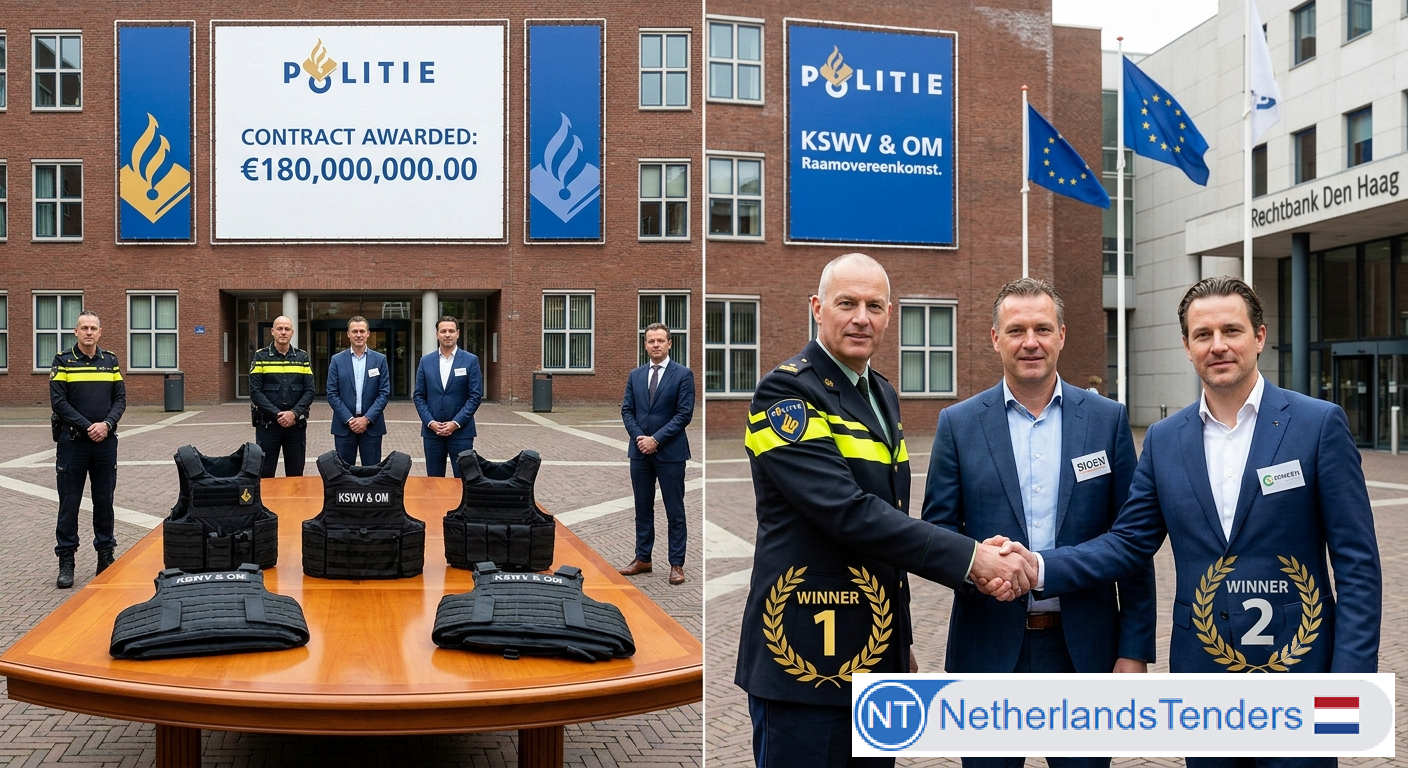
Netherlands Awards €180 Million Framework Contract for Bullet-Resistant Vests to Strengthen Police Officer Protection
30 Jul 2026
Standfirst The Dutch National Police (Politie) has awarded a framework agreement valued at approximately €180 million for the supply of bullet-resistant and stab-resistant vests equipped with a MOLLE carrying system and scaling module. The long-term procurement aims to modernise personal protective equipment while ensuring operational readiness for police officers across the Netherlands. Introduction The Netherlands has completed a major public procurement for advanced ballistic protection equipment by awarding a framework agreement covering bullet-resistant and stab-resistant vests with an integrated MOLLE carrying system and scaling module. The contract forms part of the Dutch Police's ongoing investment in modern protective equipment designed to enhance officer safety during operational duties. The procurement was conducted through an open procedure under Directive 2014/24/EU and attracted competitive participation from the protective equipment industry. With an estimated framework value of €180 million, the project represents one of the largest recent investments in police personal protective equipment in the Netherlands. Why This Contract Matters Personal protective equipment is a critical component of modern law enforcement operations. Police officers increasingly face diverse operational risks that require reliable ballistic and stab protection while maintaining mobility, comfort and compatibility with operational gear. By investing in next-generation protective vests featuring a MOLLE carrying system, the Dutch Police aims to provide officers with modular equipment that can be adapted to different operational scenarios. The long-term framework agreement also provides procurement stability, allowing equipment to be supplied over several years while maintaining consistent technical standards. Contract Timeline Milestone Details Contract Award Notice Published 30 July 2026 (OJ S 145/2026) Winner Selected 25 February 2026 Contract Signed 1 July 2026 Contract Start 1 July 2026 Contract End 30 June 2032 Contract Overview The procurement covers the supply of bullet-resistant and stab-resistant vests incorporating a MOLLE carrying system together with a scaling module for the Dutch National Police. The contract also includes compliance with detailed technical and ballistic performance requirements specified within the procurement documentation. The framework agreement has an estimated value of €180 million (excluding VAT) and will operate for an initial six-year period. The contracting authority has also included options to extend the agreement through three additional renewal periods, enabling long-term continuity in the supply of protective equipment if required. Key Contract Details Item Information Country Netherlands Contracting Authority Politie (Dutch National Police) Project Bullet-resistant and Stab-resistant Vest with MOLLE Carrying System and Scaling Module (KSWV & OM) Procurement Type Supplies Procedure Open Procedure Estimated Framework Value EUR 180,000,000 (excluding VAT) Main CPV Code 35815100 – Bullet-proof vests Additional CPV Code 35200000 – Police equipment Framework Duration 1 July 2026 – 30 June 2032 Applicable Legislation Directive 2014/24/EU Project Scope The procurement covers the acquisition of bullet-resistant and stab-resistant vests equipped with a Modular Lightweight Load-carrying Equipment (MOLLE) system and an associated scaling module for the Dutch National Police. The equipment is intended to provide enhanced ballistic protection while allowing officers to configure and carry operational gear according to different policing requirements. According to the procurement documents, the contract includes not only the supply of protective vests but also compliance with detailed technical specifications relating to the vest covers, plate carriers, transport bags and ballistic protection performance. These requirements are defined through the contracting authority's programme of requirements and product specifications, ensuring that all supplied equipment meets operational and safety standards. The framework agreement has been established without reopening competition during its execution. It will run for an initial six-year period, with options for three additional extensions of three years each, allowing the Dutch Police to maintain long-term continuity in the supply of critical personal protective equipment. Supply of bullet-resistant and stab-resistant vests. Integrated MOLLE carrying system for modular operational equipment. Scaling module to support different deployment requirements. Compliance with detailed ballistic and product performance specifications. Long-term framework agreement supporting nationwide police operations. About the Contracting Authority Politie (Dutch National Police) is the national law enforcement authority of the Netherlands and acted as the contracting authority for this procurement. As a central government authority responsible for public order and safety, the organisation regularly procures specialised operational equipment to support frontline policing activities. Through this procurement, the Dutch Police sought to establish a long-term supply arrangement for modern protective equipment capable of meeting evolving operational requirements. The procurement was conducted under the provisions of Directive 2014/24/EU using an open procurement procedure. About the Organisations Involved Politie served as the contracting authority responsible for designing the procurement, evaluating tenders and awarding the framework agreement for the supply of ballistic protective equipment. Sioen NV, a large Belgium-based manufacturer of protective clothing and technical textiles, was selected as the successful contractor and awarded the primary framework agreement for supplying the bullet-resistant and stab-resistant vest system. Coneen Protection Ltd, a United Kingdom-based manufacturer of protective equipment, was also identified in the award notice. The company received a secondary framework arrangement referred to as a waiting agreement, providing additional supply capability within the procurement framework. Rechtbank Den Haag (District Court of The Hague) is identified in the notice as the review organisation responsible for handling legal challenges and providing information relating to procurement review procedures. Procurement Analysis This procurement demonstrates the Dutch Police's emphasis on balancing operational performance with long-term procurement efficiency. Rather than purchasing protective equipment through multiple short-term contracts, the authority established a high-value framework agreement that enables standardisation of equipment while simplifying future ordering throughout the contract period. The award criteria also highlight that procurement decisions were based on more than price alone. While commercial competitiveness formed part of the evaluation, quality accounted for the majority of the assessment. Factors including wearing comfort, ease of use, appearance, overall performance and simulated wear testing were considered alongside price, reflecting the operational importance of protective equipment used daily by police personnel. The selection of multiple suppliers within the overall procurement framework also strengthens supply resilience. By maintaining an additional qualified supplier, the Dutch Police can better manage future operational requirements and reduce potential risks associated with supply interruptions during the life of the framework agreement. Additional Procurement Facts Country: Netherlands. Contracting Authority: Politie (Dutch National Police). Project: Bullet-resistant and Stab-resistant Vest with MOLLE Carrying System and Scaling Module (KSWV & OM). Procurement Type: Supplies. Procedure: Open Procedure. Main CPV Code: 35815100 - Bullet-proof vests. Additional CPV Code: 35200000 - Police equipment. Estimated Framework Value: EUR 180,000,000 (excluding VAT). Initial Contract Period: 1 July 2026 to 30 June 2032. Framework Agreement: Without reopening competition. Maximum Renewal Options: Three extensions of three years each. Number of Tenders Received: Seven electronic tenders. Number of Procurement Complaints Received: Two. The procurement is covered by the Government Procurement Agreement (GPA). The project is not financed by European Union funds. Market & Industry Perspective Demand for advanced personal protective equipment continues to grow across European law enforcement agencies as police organisations modernise frontline equipment to address increasingly complex operational environments. Modern ballistic protection is expected to provide not only certified protection against firearms and edged weapons but also improved ergonomics, mobility and compatibility with tactical accessories. The Dutch Police procurement reflects this evolution by combining ballistic protection with a modular MOLLE carrying system, enabling officers to configure equipment according to operational requirements. By placing significant emphasis on quality during tender evaluation, the contracting authority recognised that officer comfort, durability and usability are essential factors influencing operational effectiveness throughout the service life of protective equipment. The long-term framework structure also provides greater certainty for manufacturers while enabling the contracting authority to standardise protective equipment across the organisation. Such procurement models encourage suppliers to invest in product innovation, manufacturing capability and long-term customer support rather than competing solely on price. Economic Significance With an estimated framework value of EUR 180 million, the procurement represents a substantial public investment in officer safety and operational capability. The contract provides long-term business opportunities for manufacturers specialising in ballistic protection, tactical apparel and police equipment while supporting sustained production planning over several years. The framework agreement also contributes to procurement efficiency by reducing the need for repeated large-scale competitions during the contract period. Through a single long-term procurement, the Dutch Police can maintain consistent technical standards, improve supply continuity and simplify future purchasing processes while ensuring that protective equipment remains available for operational requirements. For the wider protective equipment industry, the contract demonstrates the continued importance of quality-driven public procurement. Manufacturers capable of delivering certified ballistic protection, innovative product design and reliable long-term supply arrangements are likely to remain competitive as European law enforcement agencies continue investing in modern personal protective equipment. Future Procurement Opportunities The award of this framework agreement concludes the current procurement process for bullet-resistant and stab-resistant vests. However, the long-term nature of the framework indicates that future procurement opportunities may arise through contract renewals, replacement programmes and new equipment requirements as operational needs evolve. The contract award notice does not identify any additional planned procurements beyond the renewal options included in the framework agreement. Manufacturers specialising in ballistic protection, tactical apparel and police equipment should continue monitoring procurement notices issued by the Dutch National Police for future opportunities involving personal protective equipment, tactical gear and related law enforcement supplies. Opportunities for Suppliers Although the framework agreement has now been awarded, the procurement highlights the continuing demand for innovative personal protective equipment within European law enforcement agencies. Companies seeking future opportunities should focus on developing products that combine certified ballistic protection with operational comfort, durability and modular functionality. Manufacturers of certified bullet-resistant and stab-resistant body armour. Suppliers of modular tactical equipment and MOLLE-compatible systems. Companies specialising in police protective clothing and operational gear. Manufacturers capable of demonstrating long-term production capacity and supply reliability. Businesses with strong quality assurance, product testing and regulatory compliance capabilities. What Businesses Should Watch Future Dutch Police procurements for personal protective equipment. Framework agreement renewal decisions during the contract lifecycle. New European tenders covering ballistic protection and police equipment. Developments in ballistic protection technologies and officer safety standards. Changes in public procurement requirements relating to operational quality and product performance. Growing emphasis on modular equipment systems and long-term supply partnerships. NetherlandsTenders.com Procurement Intelligence The Dutch National Police has adopted a long-term procurement strategy that places operational effectiveness ahead of short-term purchasing considerations. Rather than evaluating suppliers primarily on cost, the procurement allocated the majority of evaluation weight to quality, recognising that protective equipment directly influences officer safety, mobility and operational performance. The framework agreement also reflects a strategic approach to supply chain resilience. By establishing a long-term contractual arrangement supported by an additional supplier through a waiting agreement, the contracting authority has strengthened its ability to maintain uninterrupted access to critical protective equipment throughout the contract period. This approach reduces procurement risk while supporting consistent equipment standards across the police organisation. For manufacturers operating in the defence, law enforcement and protective equipment sectors, the procurement demonstrates that public buyers increasingly value proven product performance, user comfort, lifecycle reliability and manufacturing capability alongside competitive pricing. Suppliers that can consistently meet these expectations are likely to remain well positioned for future public-sector opportunities. Supplier Takeaways The Dutch National Police has awarded a framework agreement valued at approximately EUR 180 million for advanced ballistic protective equipment. The contract covers the supply of bullet-resistant and stab-resistant vests with integrated MOLLE carrying systems and scaling modules. The framework agreement will operate for an initial six-year period beginning on 1 July 2026. Quality represented the primary evaluation criterion, carrying greater weight than price during tender assessment. Manufacturers should continue monitoring future Dutch and European law enforcement procurement opportunities for protective equipment. Key Takeaways The Netherlands has completed a major investment in police officer protective equipment through a long-term framework agreement. The procurement supports the modernisation of frontline policing by supplying advanced ballistic and stab-resistant body armour. The estimated framework value is EUR 180 million, making it one of the country's significant public procurement projects for police equipment. The procurement balanced commercial competitiveness with demanding technical and operational quality requirements. The framework agreement strengthens long-term equipment standardisation and supply continuity for the Dutch National Police. Conclusion The award of the KSWV & OM framework agreement marks an important step in strengthening personal protection for police officers across the Netherlands. By investing in advanced ballistic protection supported by modular equipment systems, the Dutch National Police is enhancing operational readiness while providing officers with equipment designed for modern policing environments. Beyond its immediate procurement value, the contract demonstrates how European public authorities increasingly view protective equipment as a long-term strategic investment rather than a routine supply purchase. The emphasis on quality, operational performance and supply continuity offers valuable insights for manufacturers seeking future opportunities within the public safety and law enforcement sectors. Source: TED European Union, Contract Award Notice, OJ S 145/2026, Notice No. 526424-2026. Contracting Authority: Politie (Dutch National Police)
View Details