Dutch Grid Operator Signs Up to EUR 21.8 Million Cybersecurity Partner, But Won't Say Who
19 Aug 2026
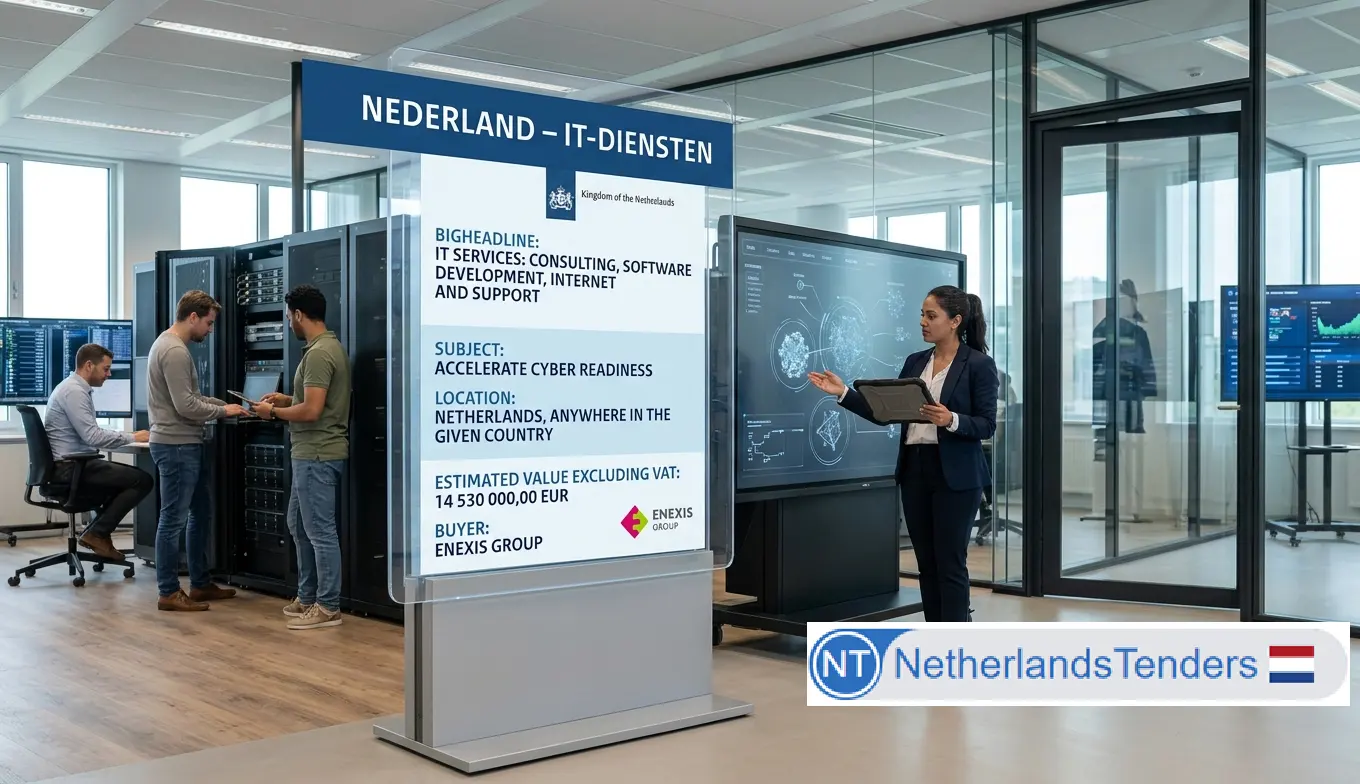
Standfirst Enexis Groep, one of the Netherlands' largest electricity grid operators, has awarded a strategic cybersecurity partnership worth an estimated EUR 14 530 000, rising to a stated maximum of EUR 21 795 000, to strengthen its IT and industrial control system defences. The notice withholds the winning supplier's identity entirely and the underlying data contains signs it may not have been fully prepared for publication. Introduction Electricity grid operators sit near the top of any list of infrastructure worth protecting from cyberattack, spanning both conventional IT systems and the operational technology that actually controls substations and distribution equipment. Enexis Groep, the Dutch grid operator serving large parts of the country, has just locked in a long term partner to help close the gap between where its digital defences stand today and where it wants them to be. Unusually, the notice recording that decision does not name the winner. Nor does it name the company that lost. Both appear only as "Anonymous 1" and "Anonymous 2," and several other fields in the same record carry the hallmarks of placeholder text rather than finished data. Why This Contract Matters Enexis describes the goal of this contract in its own tender documents: a strategic partner that substantially contributes to strengthening its security organisation across both IT and OT, the operational technology layer that runs grid infrastructure directly. The work is commissioned by Enexis's first line security function, its Digital Resilience Center and spans operational, tactical and strategic levels, with the partner expected not just to execute predefined resilience goals but to challenge them critically and help shape targets for future years. For a company responsible for keeping electricity flowing to a large share of the Netherlands, a multi year, potentially eight year cybersecurity partnership of this depth is a significant statement about how seriously grid operators now treat digital resilience as core infrastructure risk, on par with physical asset maintenance. Contract Timeline Original tender procedure referenced by this result: a previously published notice on file with the Publications Office Winner selected: 29 May 2026 Contract concluded: 23 June 2026 Notice dispatched to the Publications Office: 18 August 2026 Published in the Official Journal, OJ S 159/2026: 19 August 2026 Base contract term: 4 years, with options to extend by 2 years twice, for a maximum of 8 years Contract Overview Enexis ran a negotiated procedure with prior publication of a call for competition, under the EU's Utilities Directive, to select a strategic cybersecurity partner. Two tenders were submitted, both electronically and one was selected as the winner, structured as a framework agreement without reopening of competition, meaning the chosen partner holds the relationship exclusively for the contract term. The notice's value fields do not fully agree. The procedure level and lot level estimated value, along with the notice's overall approximate framework value, are all stated at EUR 14 530 000. The lot result section, however, records a separate maximum framework value of EUR 21 795 000, roughly one and a half times higher, alongside a re-estimated value that matches the lower EUR 14 530 000 figure. Neither the winner's nor the competing bidder's identity, nor several other organisational details, are disclosed in usable form. Key Contract Details Contracting authorityEnexis Groep Contract titleAccelerate Cyber Readiness CPV code72000000, IT services: consulting, software development, Internet and support Procedure typeNegotiated procedure with prior publication of a call for competition Legal basisDirective 2014/25/EU, the Utilities Directive Estimated / approximate valueEUR 14 530 000, excluding VAT Maximum framework value (lot result field)EUR 21 795 000, an unreconciled figure roughly 1.5 times the estimate Base contract term4 years Renewal optionsTwo renewals of 2 years each, maximum total term 8 years Tenders received2, both submitted electronically WinnerIdentity withheld, listed as "Anonymous 1," classified as a medium enterprise Non-winning tendererIdentity withheld, listed as "Anonymous 2," classified as a large enterprise Winner selected29 May 2026 Contract signed23 June 2026 GPA coverageYes Framework structureFramework agreement without reopening of competition SubcontractingNo, per winner's tender Complaints received0 Review bodyRechtbank Oost-Brabant ('s-Hertogenbosch) Notice reference574621-2026, OJ S 159/2026, published 19 August 2026 Project Scope The contract covers a strategic partnership to strengthen Enexis's security organisation across both IT and operational technology domains, commissioned through the company's Digital Resilience Center, its first line security function. The scope explicitly spans three levels: operational work supporting day to day security functions, tactical work shaping how security programmes are implemented and strategic work setting the direction of Enexis's digital resilience goals over time. The partner is expected to actively challenge existing targets rather than simply execute them and to help define resilience objectives for years beyond the current contract term. About the Contracting Authority Enexis Groep is a Dutch electricity distribution grid operator, based in 's-Hertogenbosch in the Noord-Brabant region, classified as a contracting entity active in electricity related activities. Enexis manages electricity and gas distribution infrastructure across a substantial part of the Netherlands, making the resilience of its IT and operational technology systems a matter of direct public interest for the millions of households and businesses it serves. About the Organisations Involved Enexis Groep As covered above, Enexis is the buyer for this contract and is also the organisation providing further procedural information and offline access to the tender documents. Rechtbank Oost-Brabant Rechtbank Oost-Brabant, based in 's-Hertogenbosch, is named as the review organisation for this contract, the regional court with jurisdiction covering Enexis's registered location, with review deadline details deferred to the underlying tender documentation. The winner and the non-winning tenderer Both the winning supplier and the unsuccessful competing tenderer are identified in this notice only as "Anonymous 1" and "Anonymous 2," classified respectively as a medium and a large enterprise. Every other identifying field for both organisations, including postal address, contact name, email address, telephone number and registration number, is populated with generic placeholder text rather than genuine information. Notably, the organisation labelled "Anonymous 1" also appears listed separately among the notice's non-winning tenderers, an internal inconsistency, since the same entity cannot logically be both the winner and an unsuccessful bidder. The winning tender's own identifier field is recorded simply as the word "TEST." Together, these details suggest this notice may not have been fully finalised before publication, rather than reflecting a clean, deliberate anonymisation process. Procurement Analysis Enexis used a negotiated procedure with prior publication of a call for competition, a route well suited to complex, relationship driven service contracts like a multi year strategic security partnership, where the buyer benefits from dialogue with bidders before finalising terms. Only two tenders were received, a reasonable field for a specialised, high trust engagement of this kind, where relatively few firms combine deep IT and operational technology security expertise at the scale a national grid operator requires. Withholding a cybersecurity contractor's identity is not inherently unusual or improper. Publicly naming the firm responsible for hardening a critical infrastructure operator's digital defences could itself provide useful reconnaissance information to a potential attacker and some buyers deliberately redact this kind of detail for exactly that reason. What is unusual here is the specific character of the redaction: professional anonymisation typically removes identifying detail cleanly, whereas this notice retains structurally complete fields populated with generic, template style placeholder text, the word "TEST" as a tender identifier being the clearest signal that this may be incomplete data entry rather than intentional security redaction. The unreconciled value figures compound the picture. A EUR 14 530 000 estimate appears three times across the notice, while a separate EUR 21 795 000 maximum framework value appears once, in the lot result section, with no explanation offered for the roughly 50 percent gap between the two. Additional Procurement Facts No complaints were recorded against this award. Neither the winning nor the non-winning tender is recorded as a variant bid. Subcontracting is recorded as not applicable for the winner and not yet known for the non-winning tenderer. This procurement is confirmed as covered by the Government Procurement Agreement. Market and Industry Perspective Strategic cybersecurity partnerships spanning both IT and operational technology are an increasingly common structure among European critical infrastructure operators, reflecting growing recognition that grid security requires integrated defence across conventional networks and the industrial control systems that manage physical equipment. Energy sector cybersecurity has drawn sustained attention across Europe amid heightened geopolitical tension and contracts of this scale and duration, potentially running eight years, indicate grid operators are treating this as long term institutional capability building rather than a short term response to any single threat. Economic Significance Whether the true ceiling is EUR 14 530 000 or EUR 21 795 000, this is a substantial, multi year investment in critical infrastructure cybersecurity by one of the Netherlands' major grid operators, reflecting the scale of resource national utilities are now committing to digital resilience. Future Procurement Opportunities With two available two year renewal options built into the framework, Enexis retains flexibility to extend this partnership incrementally toward its maximum eight year term or to return to the market earlier should the relationship not develop as intended. Opportunities for Suppliers Cybersecurity firms with combined IT and operational technology expertise serving European critical infrastructure operators should note that this category of strategic, multi year security partnership continues to be a meaningful growth area for grid operators specifically. Given the redacted nature of this particular notice, firms interested in this market may need to monitor future Enexis and comparable Dutch utility tenders directly rather than relying on this result to identify the current incumbent. What Businesses Should Watch Whether Enexis or the Publications Office issues a correction clarifying the withheld supplier identities or the unreconciled value figures in this notice. Broader patterns of anonymised or incompletely published notices across Dutch utility cybersecurity procurement. Whether Enexis exercises its renewal options as the base four year term progresses. Comparable strategic cybersecurity partnership tenders from other European grid and utility operators. NetherlandsTenders.com Procurement Intelligence This notice sits at an interesting intersection of two legitimate but distinct practices: security conscious redaction of sensitive supplier information and incomplete data preparation before publication. Businesses and analysts relying on TED notices for market intelligence should treat this distinction carefully. A properly redacted notice still conveys genuine, reliable information about contract scale, structure and timing even without naming the parties involved; a notice populated with unfinished template data, by contrast, may contain figures and details that were never meant to be published in their current form, including the apparent duplication of the winning bidder within the losing tenderers list. For grid operators and other critical infrastructure buyers considering how much detail to disclose in cybersecurity related procurement notices, this case is a useful cautionary example: redaction protects security, but it should be applied cleanly and consistently, not left showing template artefacts like literal placeholder words, which can undermine confidence in the notice's other, more substantive figures. Strategically, the underlying contract itself, a long term, high value strategic partnership spanning both IT and operational technology security for a major European grid operator, is a genuinely significant data point about where utility cybersecurity investment is heading, even if this particular notice cannot confirm who ultimately won the work. Supplier Takeaways This notice withholds both the winning and losing bidders' identities, illustrating that critical infrastructure cybersecurity contracts sometimes involve deliberate confidentiality around supplier identity. Several data fields in this notice, including a tender identifier literally recorded as "TEST," suggest incomplete preparation rather than a clean anonymisation process. The notice's value figures range from EUR 14 530 000 to EUR 21 795 000 depending on which field is read, an unreconciled discrepancy worth independent verification. Strategic, multi year IT and operational technology security partnerships remain a significant growth category for firms serving European grid and utility operators. The contract's potential eight year term, through two available renewal options, underscores how long term these critical infrastructure security relationships are structured to run. Key Takeaways Enexis Groep awarded a strategic IT and operational technology cybersecurity partnership worth an estimated EUR 14 530 000, with a separately stated maximum of EUR 21 795 000. Both the winning and losing bidders' identities are withheld in this notice, replaced with generic placeholder labels. Data quality issues in the notice, including a literal "TEST" tender identifier and a winner also appearing among non-winning tenderers, suggest incomplete data preparation. The contract runs a base term of 4 years, extendable by up to two further 2 year periods, for a maximum of 8 years. Only two tenders were received under this negotiated procedure. No complaints were recorded against the award. Conclusion A major Dutch grid operator has committed to strengthening its cyber defences across both office IT and the operational technology that keeps electricity flowing, in a partnership that could run the better part of a decade. Who exactly is doing that work and precisely how much it will ultimately cost, are questions this particular public record cannot yet answer, a reminder that even in an era of mandated procurement transparency, the paperwork does not always keep pace with the deal itself. Source: Tenders Electronic Daily (TED), Contract Award Notice 574621-2026, Official Journal of the European Union, OJ S 159/2026, published on 19 August 2026.
View Details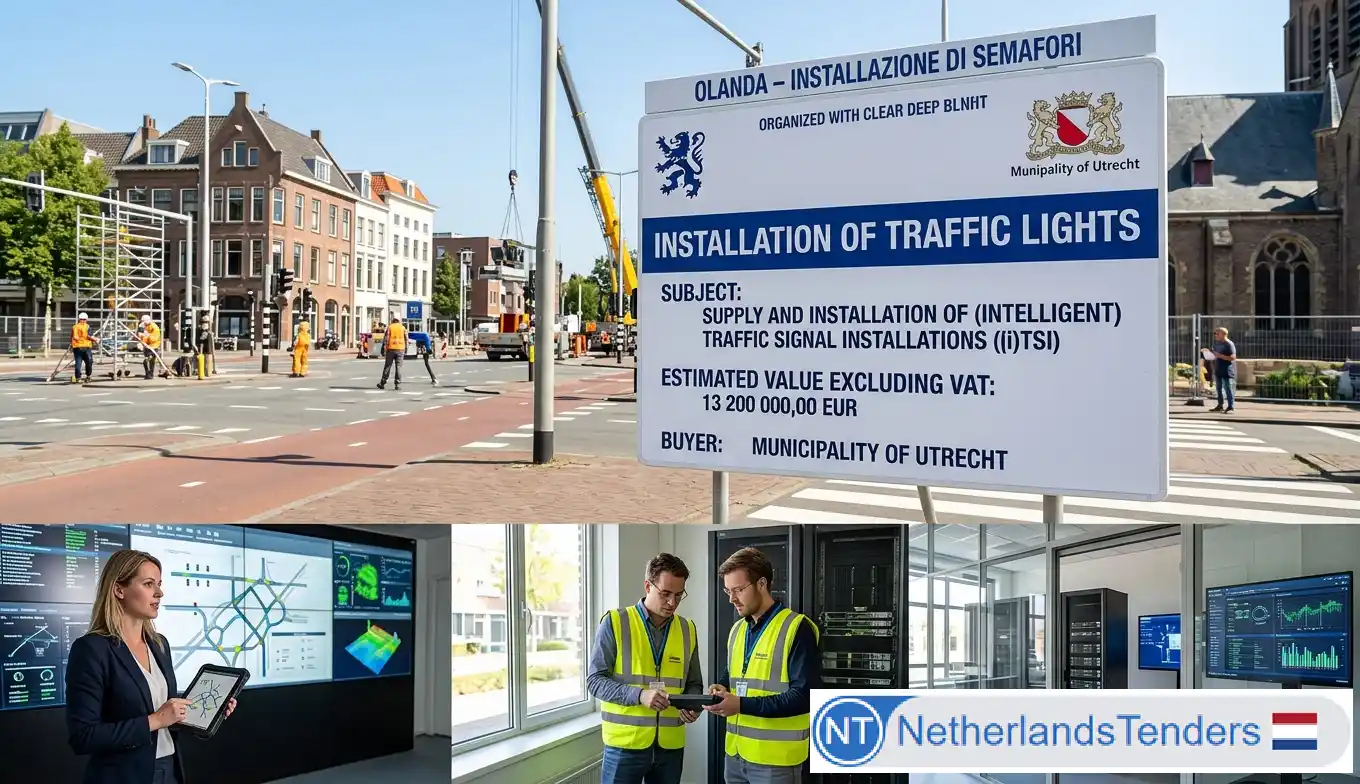
Utrecht Names Hoeflake to Build and Replace Its Smart Traffic Lights
18 Aug 2026
Standfirst The Municipality of Utrecht has awarded a framework agreement worth up to 15 million euros to Hoeflake Infratechniek B.V. for constructing and replacing intelligent traffic light installations across the city. Four tenders were received for the contract, which can run up to four years with renewal options. Introduction Traffic lights are one of those pieces of urban infrastructure that only draw attention when they fail. Behind every intersection that keeps cars, cyclists and pedestrians moving safely sits equipment that needs regular replacement and, increasingly, upgrading to intelligent systems that can respond dynamically to traffic conditions. Utrecht has just secured a contractor to handle exactly this work across the city for the coming years, appointing a specialist infrastructure firm to a new framework agreement. Why This Contract Matters Intelligent traffic control installations, known in Dutch as iVRI's, are increasingly central to how cities manage congestion, prioritise cyclists and buses and improve road safety. Utrecht's framework agreement gives it a dedicated partner for constructing new installations and replacing or upgrading existing ones as the city's traffic management needs evolve. Using a single framework contractor for this work, rather than tendering each installation separately, gives the municipality consistency and speed in rolling out or replacing traffic control infrastructure across different parts of the city. Contract Timeline The winner was selected on 24 June 2026 and the contract was concluded on 3 August 2026. The notice recording this award was dispatched on 17 August 2026 and published in the Official Journal of the European Union on 18 August 2026, under OJ S issue 158/2026. The framework runs for 24 months, with an option to extend twice by one year each, giving a maximum possible term of four years. Contract Overview Gemeente Utrecht ran an open procedure under Directive 2014/24/EU for a framework agreement, based on the Dutch RAW technical specification system commonly used in civil engineering and infrastructure contracts, covering the supply and construction of intelligent traffic control installations or the replacement and modification of existing ones. The classification is CPV code 45316212, Installation of traffic lights. The original estimated value was 13,200,000.00 EUR excluding VAT. At the results stage, the confirmed maximum value of the framework agreement is recorded at 15,000,000.00 EUR, a modest increase over the initial estimate. Four tenders were received, one of which came from an SME classified bidder. Key Contract Details Contracting AuthorityGemeente Utrecht Winning BidderHoeflake Infratechniek B.V. Contract TitleRaamovereenkomst aanleg en vervangen (i)VRI (Framework agreement for construction and replacement of intelligent traffic light installations) Procedure TypeOpen procedure, not accelerated Legal BasisDirective 2014/24/EU CPV Code45316212 Installation of traffic lights Original Estimated Value (excl VAT)13,200,000.00 EUR Confirmed Maximum Framework Value (excl VAT)15,000,000.00 EUR Award CriteriaPrice 65 points, Quality 35 points Framework StructureFramework agreement without reopening of competition Initial Contract Term24 months Maximum Renewals2, one year each, for a maximum total term of 4 years Tenders Received4, all submitted electronically, 1 from an SME EU FundingNot financed with EU funds Covered by GPAYes SubcontractingNo Contract Concluded3 August 2026 Review OrganisationRechtbank Midden-Nederland Project Scope The framework covers the supply and construction of new intelligent traffic control installations, known as (i)VRI's, across Utrecht, as well as the replacement or modification of existing installations. Work is carried out under the RAW system, a standardised Dutch specification framework widely used for civil engineering and infrastructure works, ensuring consistent technical standards across individual projects issued under the framework. About the Contracting Authority Gemeente Utrecht Gemeente Utrecht is a regional authority with general public services as its classified activity, based in Utrecht, Netherlands. As one of the Netherlands' larger municipalities, it manages a substantial road and traffic infrastructure network and this framework supports its ongoing programme of intelligent traffic control installation and renewal. About the Organisations Involved Hoeflake Infratechniek B.V. Hoeflake Infratechniek B.V., based in Hedel and classified as a medium sized enterprise, won this framework with a tender that was not formally ranked against competitors in the notice's records. No subcontracting was declared and the tender was not submitted as a variant, meaning Hoeflake will deliver the contracted construction and replacement work directly. Rechtbank Midden-Nederland Rechtbank Midden-Nederland, the District Court of Central Netherlands, is named as the review organisation for this procurement, the standard body for hearing challenges to Dutch public procurement decisions in this region. Procurement Analysis Utrecht ran this as an open procedure and received four tenders, a solid competitive field for a specialised traffic infrastructure framework of this kind. Award criteria weighted price at 65 points against quality at 35 points, giving cost a clear but not overwhelming edge in the final decision, with both criteria described only by reference to the separate tender guide rather than detailed further in the notice itself. The framework operates without reopening of competition, meaning Utrecht will work directly with Hoeflake Infratechniek for individual projects issued under the framework rather than running further competitive mini tenders during its term. Additional Procurement Facts The contract is not financed with EU funds and is covered by the Government Procurement Agreement. No dynamic purchasing system applies and no strategic procurement objectives were declared for this lot. No subcontracting was declared by the winning contractor. Market and Industry Perspective Intelligent traffic control installation is a specialised segment of Dutch civil infrastructure work and municipalities increasingly favour framework agreements of this kind to give themselves a consistent delivery partner across multiple individual projects, rather than tendering each traffic light installation or replacement separately. Economic Significance At a confirmed maximum value of 15 million euros, this framework represents a meaningful, multi year investment in Utrecht's traffic management infrastructure. For Hoeflake Infratechniek, it secures a substantial, exclusive role delivering this category of work for the municipality over the framework's potential four year life. Future Procurement Opportunities With the framework structured without reopening of competition and running up to four years if both renewal options are exercised, the next comparable opportunity for competing infrastructure contractors is unlikely to arise until this framework's eventual expiry. Opportunities for Suppliers Infrastructure and traffic systems contractors interested in Dutch municipal traffic control work should note the competitive field this specific framework attracted, four tenders and should watch for similar framework tenders from other Dutch municipalities investing in intelligent traffic management infrastructure. What Businesses Should Watch Traffic infrastructure contractors should watch for Utrecht's eventual renewal of this framework once its term, including any exercised extensions, concludes and should monitor for comparable tenders from other Dutch municipalities pursuing similar intelligent traffic control investment programmes. NetherlandsTenders.com Procurement Intelligence This award illustrates how Dutch municipalities manage recurring, specialised infrastructure needs like intelligent traffic control installation through single supplier framework agreements, prioritising consistency and delivery speed over repeated competitive tendering for individual projects. Its strategic importance lies in the balance struck between price and quality in the award criteria, with price carrying the larger share at 65 points but quality still meaningfully represented at 35, reflecting the technical complexity involved in intelligent traffic systems work even within a fundamentally cost conscious evaluation. Suppliers can draw a lesson from the four tender field this framework attracted: this remains a genuinely competitive segment of Dutch infrastructure contracting and firms with strong RAW system delivery credentials and traffic systems expertise continue to find real opportunity in municipal framework tenders of this kind. Supplier Takeaways Four tenders were received, with price weighted at 65 points against quality at 35 points The framework operates without reopening of competition, giving the winning contractor direct delivery responsibility for the full term The confirmed maximum framework value of 15 million euros exceeds the original 13.2 million euro estimate The contract can run up to four years if both one year renewal options are exercised No subcontracting was declared by the winning contractor Key Takeaways Gemeente Utrecht has awarded a traffic light installation and replacement framework worth up to 15,000,000.00 EUR to Hoeflake Infratechniek B.V. Four tenders were received, one from an SME classified bidder Award criteria weighted price at 65 points and quality at 35 points The framework runs for 24 months with options for two further one year extensions The contract is covered by the Government Procurement Agreement but not financed with EU funds Conclusion This framework gives Utrecht a dedicated partner for building and upgrading the intelligent traffic control infrastructure that keeps the city's intersections running safely and efficiently. For Hoeflake Infratechniek, it is a substantial, potentially four year engagement with one of the Netherlands' larger municipalities. For the Dutch traffic infrastructure sector, this award confirms continued municipal investment in intelligent traffic control systems, work that will only grow in importance as cities look to manage increasingly complex and multimodal traffic flows. Source: Tenders Electronic Daily (TED), Contract Award Notice 570317-2026, Official Journal of the European Union, OJ S issue 158/2026, published on 18/08/2026.
View Details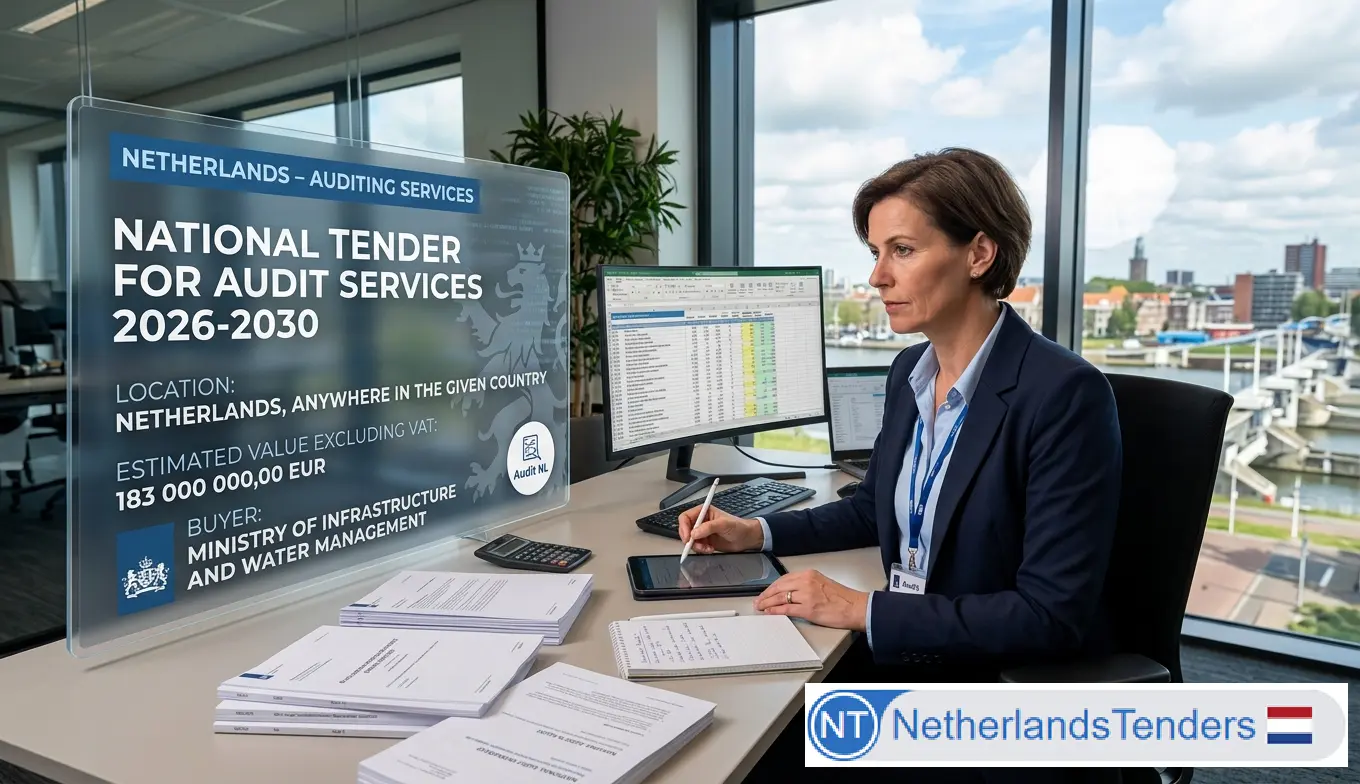
Dutch Government Locks In Ten Audit Firms for a 300 Million Euro Framework
17 Aug 2026
Standfirst The Netherlands' Ministry of Infrastructure and Water Management has appointed ten audit firms, including Deloitte, KPMG, EY and PwC, to a government wide framework agreement worth up to 300 million euros. The four year framework covers general audit services, IT audit work and multidisciplinary result based auditing across the entire Dutch central government. Introduction Every government department needs independent assurance that its finances, IT systems and operations are sound. Rather than each ministry tendering separately for audit services, the Netherlands runs a single, government wide procurement that any central government body can draw on. The Ministry of Infrastructure and Water Management has just completed exactly this exercise, appointing a panel of ten audit firms to serve the whole of Dutch central government for the next four years. Why This Contract Matters This framework is the backbone of how the Dutch national government sources external audit expertise, spanning everything from traditional financial audits to specialist IT security assessments and complex multidisciplinary engagements. Its scale, up to 300 million euros, reflects how much of this work central government departments currently outsource to external professional firms. By splitting the framework into three distinct service categories and appointing multiple firms to each, the Netherlands ensures competitive tension and genuine choice remains available across the full range of audit needs any government body might have. Contract Timeline The notice recording these awards was dispatched on 14 August 2026 and published in the Official Journal of the European Union on 17 August 2026, under OJ S issue 157/2026. Each lot runs for 48 months, with an option for two further one year extensions. Contract Overview The Ministerie van Infrastructuur en Waterstaat ran an open procedure under Directive 2014/24/EU on behalf of the Dutch central government, covering auditing services classified under CPV code 79212000. Awards were decided on best price quality ratio, with detailed methodology set out in the tender's descriptive document rather than the notice itself. The overall procedure carried an estimated value of 183,000,000.00 EUR, with a confirmed maximum framework value of 300,000,000.00 EUR. The framework is divided into three lots: Lot 1, Effort based Audit Services, estimated at 108,000,000 EUR; Lot 2, Effort and Result based IT Audit Services, estimated at 40,000,000 EUR; and Lot 3, Result based Multidisciplinary Audit Services, estimated at 35,000,000 EUR. Each lot operates as a framework agreement with reopening of competition, meaning specific assignments will be competed among the appointed firms as they arise. Key Contract Details Contracting AuthorityMinisterie van Infrastructuur en Waterstaat (on behalf of Dutch central government) Contract TitleRijksbrede aanbesteding Auditdiensten 2026-2030 (Government wide procurement of Audit Services 2026-2030) Procedure TypeOpen procedure, not accelerated Legal BasisDirective 2014/24/EU CPV Code79212000 Auditing services Lot 1Effort based Audit Services, estimated 108,000,000 EUR, 7 firms appointed Lot 2Effort and Result based IT Audit Services, estimated 40,000,000 EUR, 6 firms appointed Lot 3Result based Multidisciplinary Audit Services, estimated 35,000,000 EUR, 6 firms appointed Overall Estimated Value (excl VAT)183,000,000.00 EUR Maximum Framework Value (excl VAT)300,000,000.00 EUR Award CriteriaBest price quality ratio (detailed methodology in tender documents) Framework StructureFramework agreement with reopening of competition, all lots Contract Duration48 months, with two possible 1 year extensions Distinct Appointed Firms10, across all three lots Place of PerformanceAnywhere in the Netherlands Project Scope Lot 1 covers effort based audit services, the traditional model of general financial and operational auditing where firms are engaged for their professional time and expertise rather than a fixed deliverable. Lot 2 covers IT audit services structured on both an effort and a result basis, specialist work assessing the reliability, security and control environment of government IT systems. Lot 3 covers multidisciplinary audit services structured purely on a results basis, combining different audit specialisms into single engagements with defined outcomes. About the Contracting Authority Ministerie van Infrastructuur en Waterstaat The Ministerie van Infrastructuur en Waterstaat is a central government authority with general public services as its classified activity. For this procurement, it acted as the coordinating buyer running a government wide framework on behalf of the entire Dutch central government, meaning any national government body can draw on the appointed firms for its own audit needs. About the Organisations Involved Ten firms were appointed across the three lots, with several securing positions across all three. Deloitte Accountants B.V. and KPMG Advisory N.V., both large enterprises based in Rotterdam and Amstelveen respectively, won all three lots. PricewaterhouseCoopers Accountants N.V., based in Amsterdam and EY Accountants B.V., based in Rotterdam, both large enterprises, won Lots 2 and 3. On Lot 1, EY Adviseurs B.V., based in Rotterdam and classified as a large enterprise and USG Professionals BV, based in Almere and classified as a medium sized enterprise, secured positions alongside RA'Quel B.V., a small Nootdorp based firm winning Lots 1 and 3, Vinario B.V., a small 's-Gravenhage based firm winning Lots 1 and 2 and Vanberkel Professionals B.V., a large Zoetermeer based firm winning Lots 1 and 3. On Lot 2 specifically, Bureau Veritas Cybersecurity Europe B.V., formerly known as Secura B.V. and based in Eindhoven, was appointed as a medium sized specialist firm, reflecting the IT security expertise this lot demands. Procurement Analysis Every lot uses a framework agreement with reopening of competition, meaning the ten appointed firms will compete against each other for individual audit assignments as government bodies identify specific needs, rather than being allocated work directly. This structure preserves genuine competitive pressure and choice throughout the framework's four year term. The distribution of winners shows a clear pattern: the largest global accounting networks, Deloitte and KPMG, secured positions across all three lots, while EY and PwC split their presence between the two more specialised lots, IT audit and multidisciplinary result based work. Smaller and mid sized Dutch firms, including RA'Quel, Vinario, USG Professionals and Vanberkel Professionals, secured meaningful positions particularly on the largest lot, Lot 1, demonstrating genuine access for firms beyond the largest global networks. Additional Procurement Facts Each lot includes an option for two further one year extensions beyond the initial 48 month term, giving the framework a potential maximum life of six years if fully extended. No dynamic purchasing system applies to any lot. Market and Industry Perspective This framework's winner list reads as a near comprehensive map of the Dutch audit and accounting sector, spanning the global Big Four style networks, Deloitte, KPMG, EY and PwC, alongside smaller specialist and boutique firms. The inclusion of Bureau Veritas Cybersecurity, a specialist cybersecurity firm rather than a traditional accountancy practice, on the IT audit lot reflects how government IT assurance increasingly requires technical security expertise beyond conventional financial auditing skills. Economic Significance At a maximum value of 300 million euros, this is one of the larger professional services frameworks disclosed by the Dutch government, reflecting the sheer scale of external audit spending across the full breadth of Dutch central government departments and agencies. Future Procurement Opportunities With reopening of competition built into every lot, appointed firms will face ongoing competitive rounds for specific audit assignments throughout the framework's term. Firms not appointed to this round should watch for the framework's eventual renewal, potentially several years away if the built in extension options are exercised. Opportunities for Suppliers Audit and assurance firms, particularly smaller and specialist practices, should note that this framework demonstrates genuine room for firms beyond the largest global networks, with several mid sized and small Dutch firms securing meaningful positions, especially on the general audit services lot. What Businesses Should Watch Professional services firms in the Dutch audit and assurance market should watch for individual mini competitions launched under this framework as government departments identify specific engagement needs and should monitor whether the framework's extension options are exercised as its initial term progresses. NetherlandsTenders.com Procurement Intelligence This framework illustrates how the Dutch government consolidates a fragmented set of individual departmental audit needs into a single, centrally coordinated procurement, giving every central government body access to a pre-qualified panel of ten firms rather than each running its own separate tender. Its strategic importance lies in the balance struck between global scale and domestic specialisation. Deloitte and KPMG secured universal coverage across all three lots, while the framework still made meaningful room for smaller Dutch firms and a dedicated cybersecurity specialist, showing that centralised government frameworks of this kind need not default entirely to the largest global players. Suppliers can draw a clear lesson from how this framework was structured: reopening of competition on every lot means appointment is an entry ticket rather than a guarantee and firms should expect to actively compete for individual assignments throughout the framework's term rather than relying on passive allocation. Supplier Takeaways All three lots use reopening of competition, meaning appointed firms will actively compete for individual assignments Deloitte and KPMG were the only two firms appointed across all three lots Smaller and specialist firms, including a dedicated cybersecurity practice, secured meaningful positions alongside the largest global networks Each lot includes options for two further one year extensions beyond the initial four year term Award decisions are based on best price quality ratio, with full methodology reserved for the tender documents Key Takeaways The Dutch government has appointed ten audit firms to a government wide framework worth up to 300,000,000.00 EUR The framework covers three lots: general audit services, IT audit services and multidisciplinary result based auditing Deloitte Accountants and KPMG Advisory were appointed to all three lots Each lot runs for 48 months with options for two further one year extensions All lots operate as framework agreements with reopening of competition Conclusion This framework gives the Dutch central government a single, coordinated route to specialist audit expertise across financial, IT and multidisciplinary assurance needs for the next four to six years. For the ten appointed firms, from global networks to specialist boutiques, it secures ongoing eligibility to compete for a meaningful share of the Netherlands' substantial government audit spending. For the wider Dutch professional services market, this award confirms that centrally coordinated government frameworks can accommodate genuine diversity among suppliers, rewarding both global scale and specialist domestic expertise within the same competitive structure. Source: Tenders Electronic Daily (TED), Contract Award Notice 567417 -2026, Official Journal of the European Union, OJ S issue 157/2026, published on 17/08/2026.
View Details